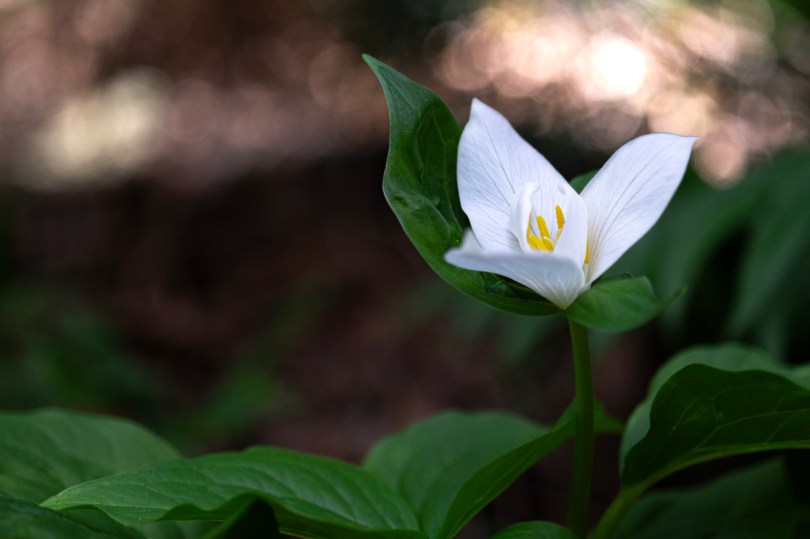
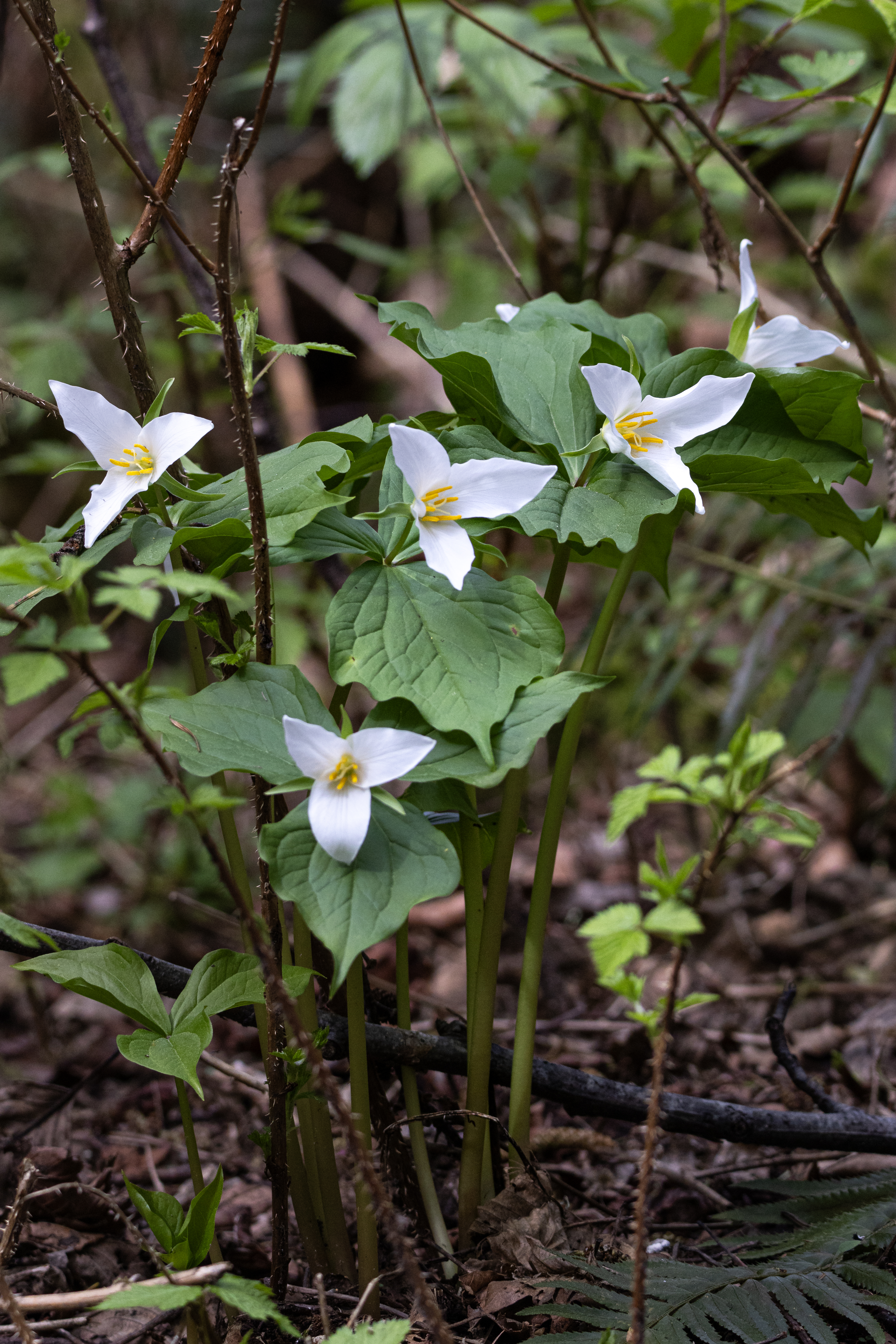
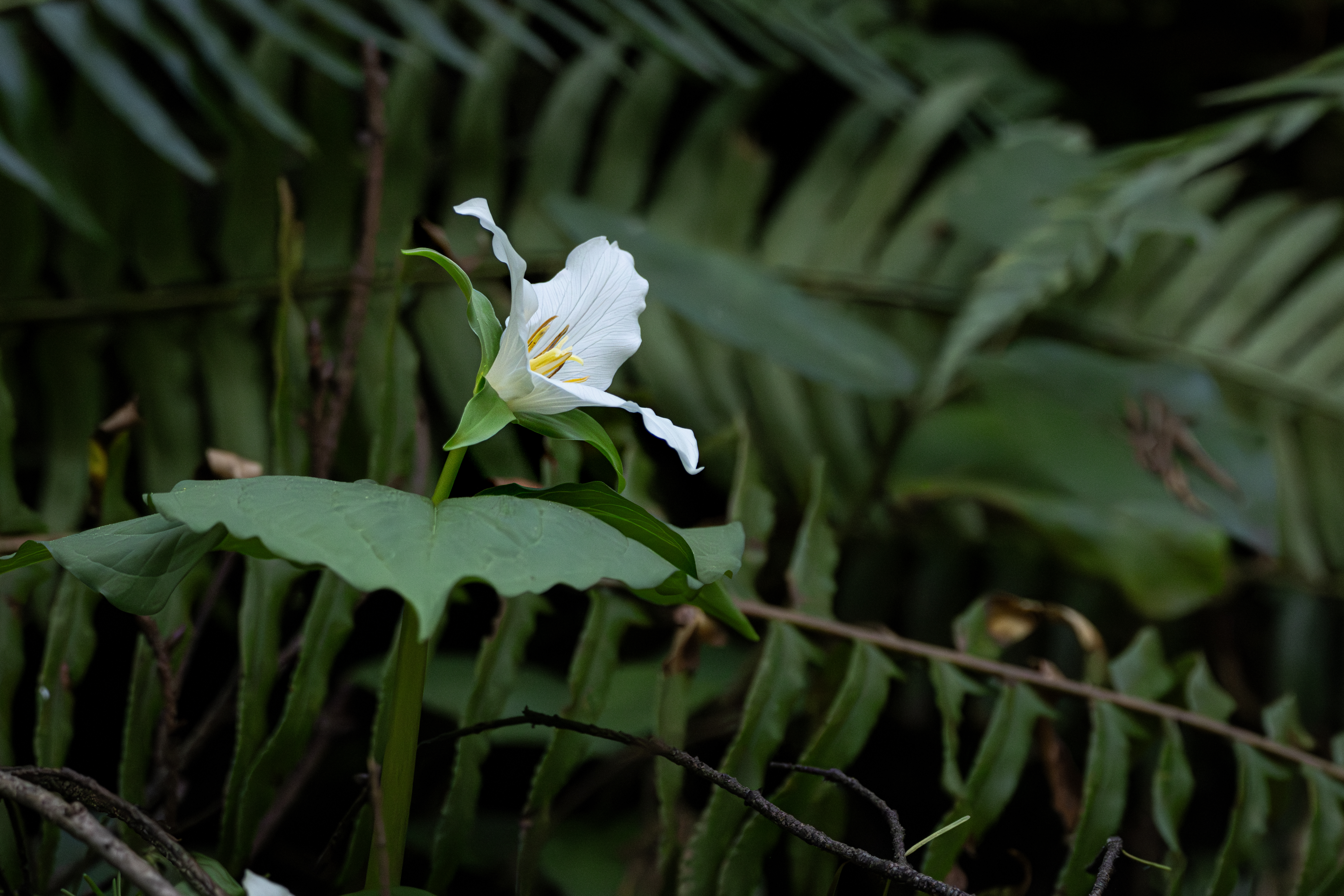
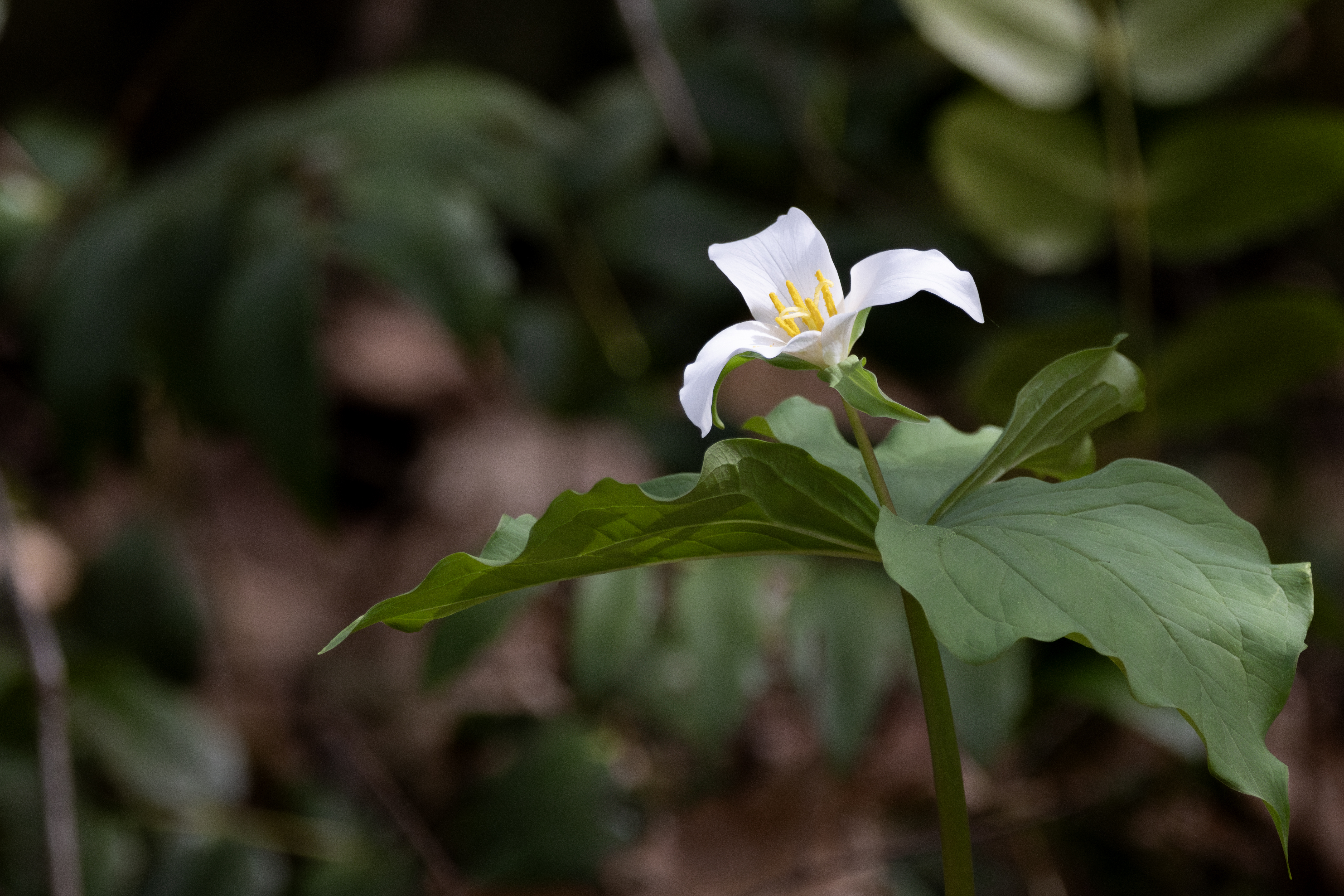
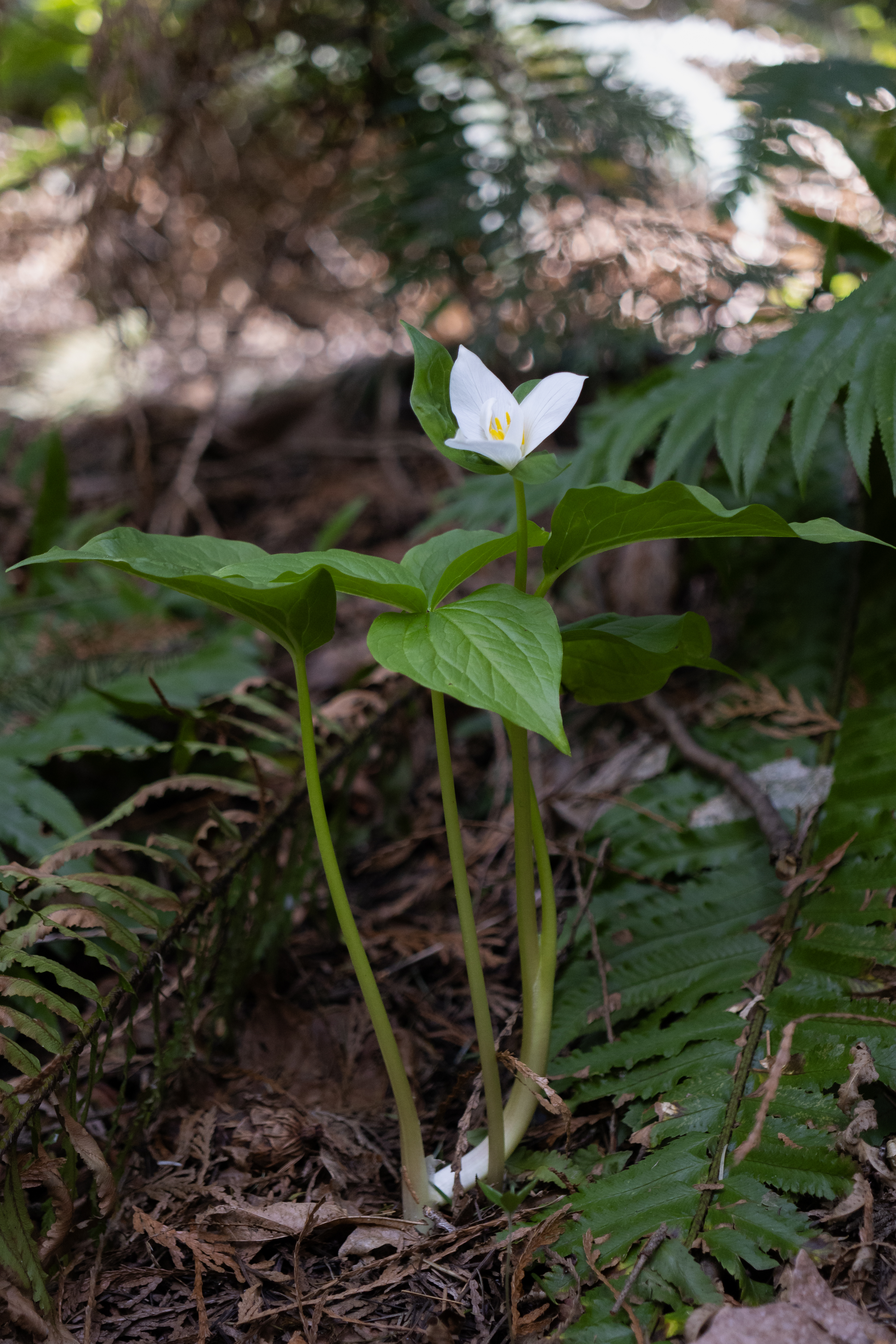
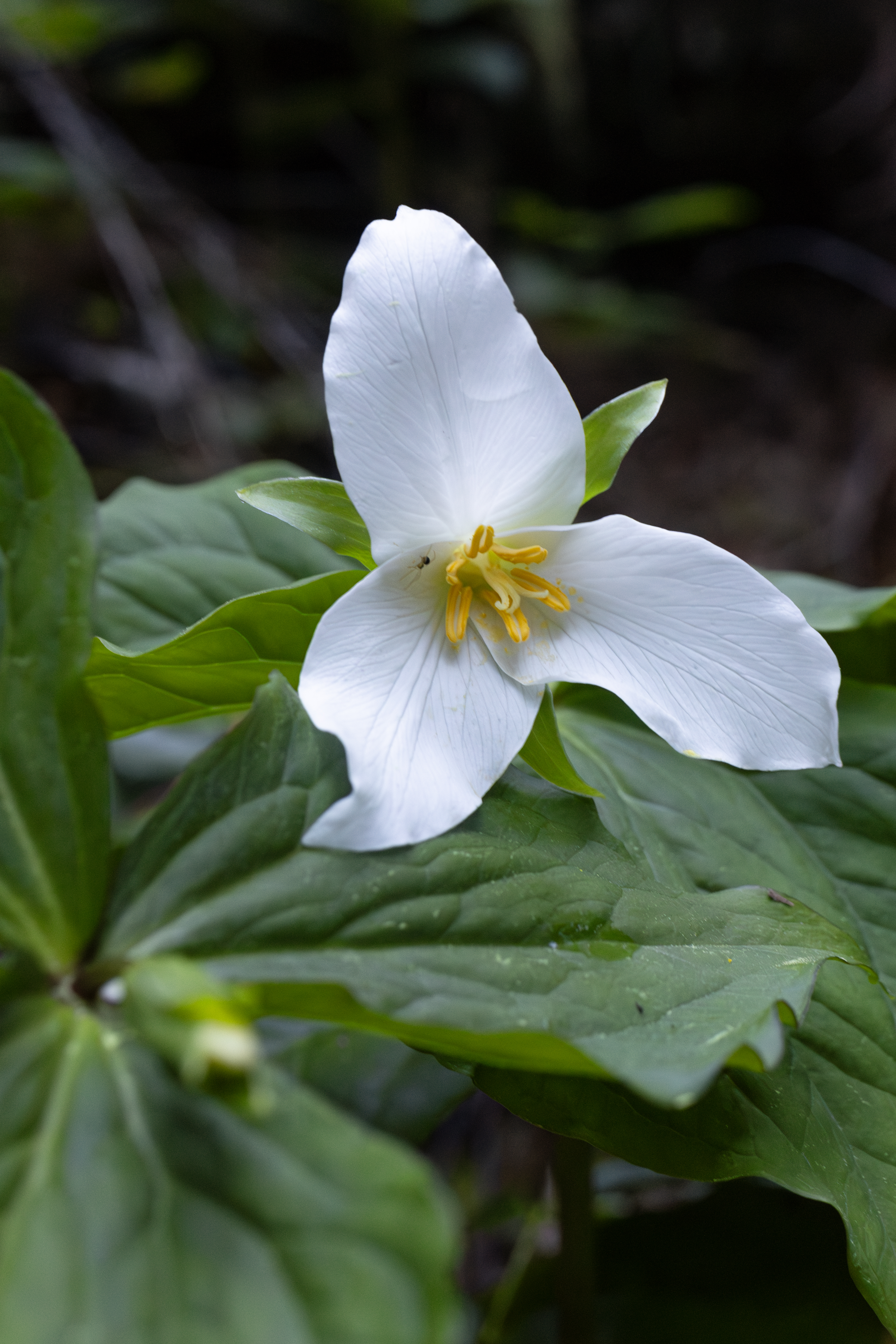
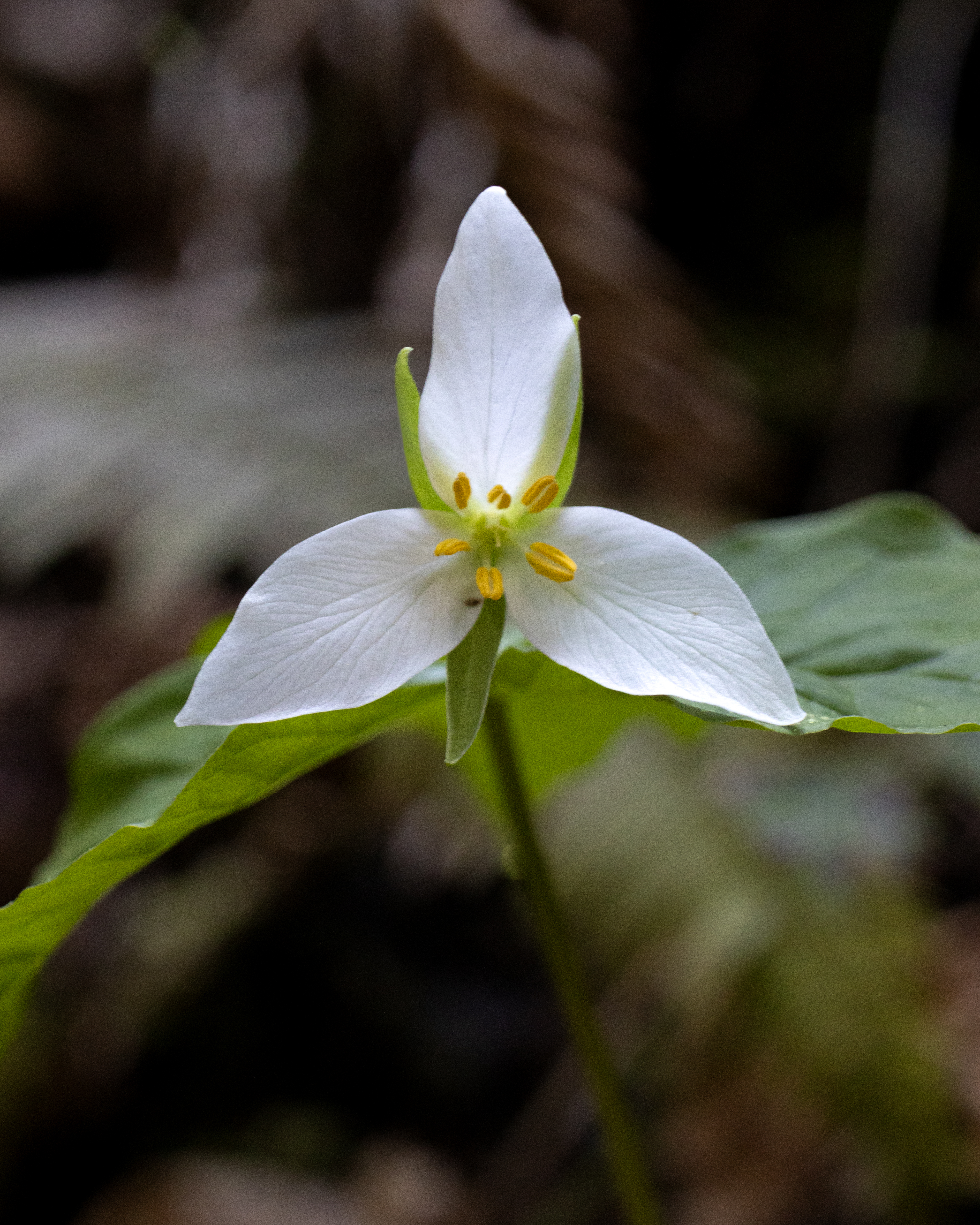
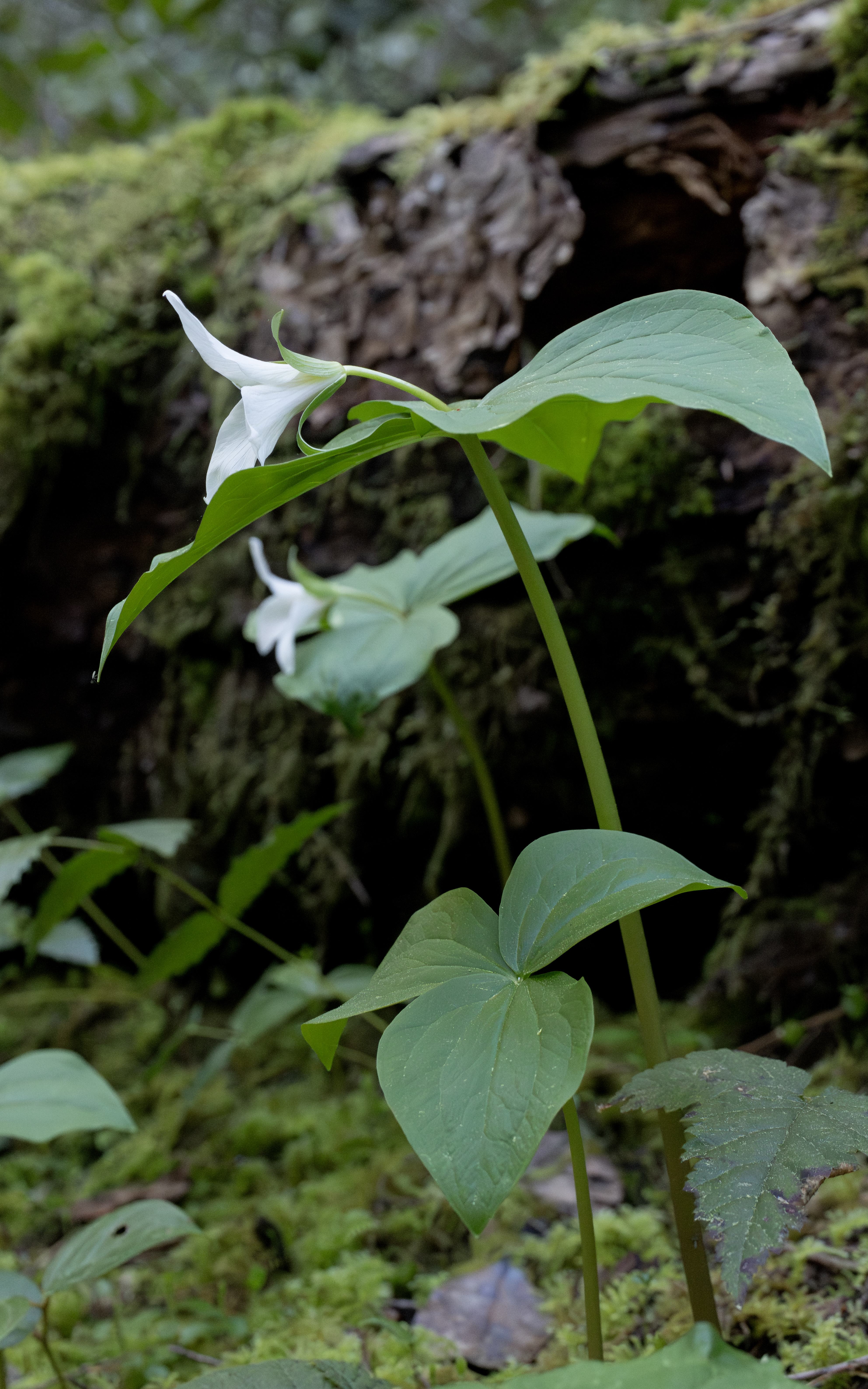
Trillium ovatum, also known as Pacific trillium or western Trillium, is a widespread trillium species abundant in Western North America. Its flowers are nearly indistinguishable from T. grandiflorum, with which it is closely related. Thankfully, they have distinct natural ranges and can easily be told apart from where you encounter them!
Western Trillium is a perennial herb spreading through underground rhizomes, preferring to grow in shaded forests.
Life cycles of Trilliums are quite interesting, as they take a long time to reach maturity. From wiki –
“The life-cycle stages of T. ovatum include a cotyledon stage, a one-leaf vegetative stage, a three-leaf vegetative (juvenile) stage, a three-leaf reproductive (flowering) stage, and a three-leaf nonflowering regressive stage. An example of the latter involves a transition from the three-leaf flowering stage to a three-leaf nonflowering regressive stage.”
In the previous years, I have seen many Trillium plants, most either past floewring, or too young to flower. Seattle finally broke my Trillium curse, and how!

 Exploring Free Green Cascadia