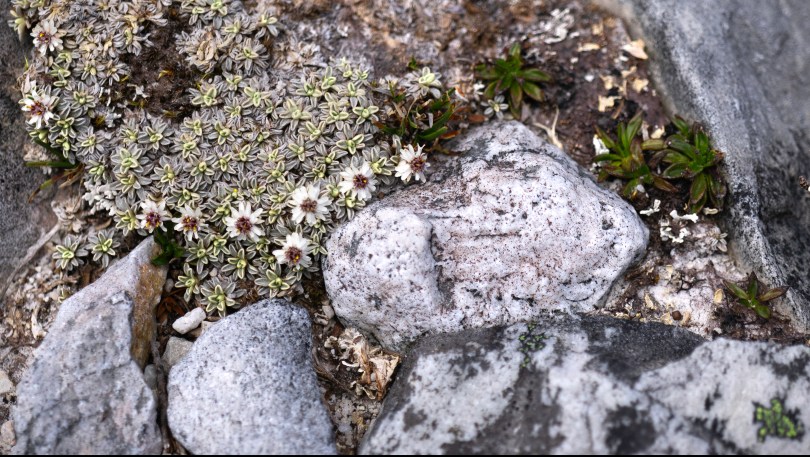
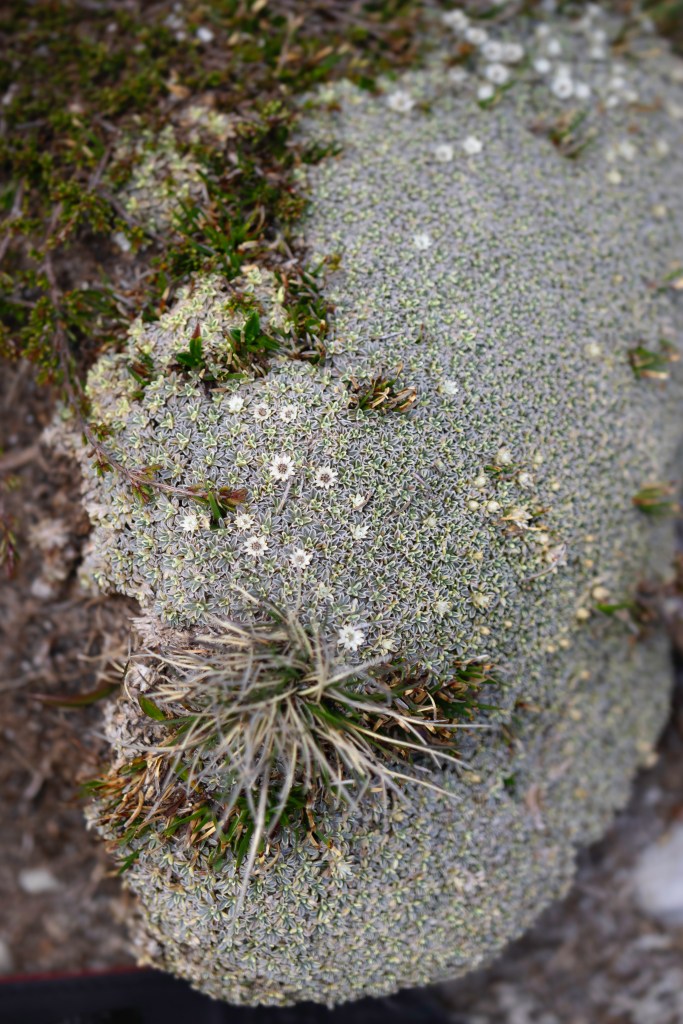
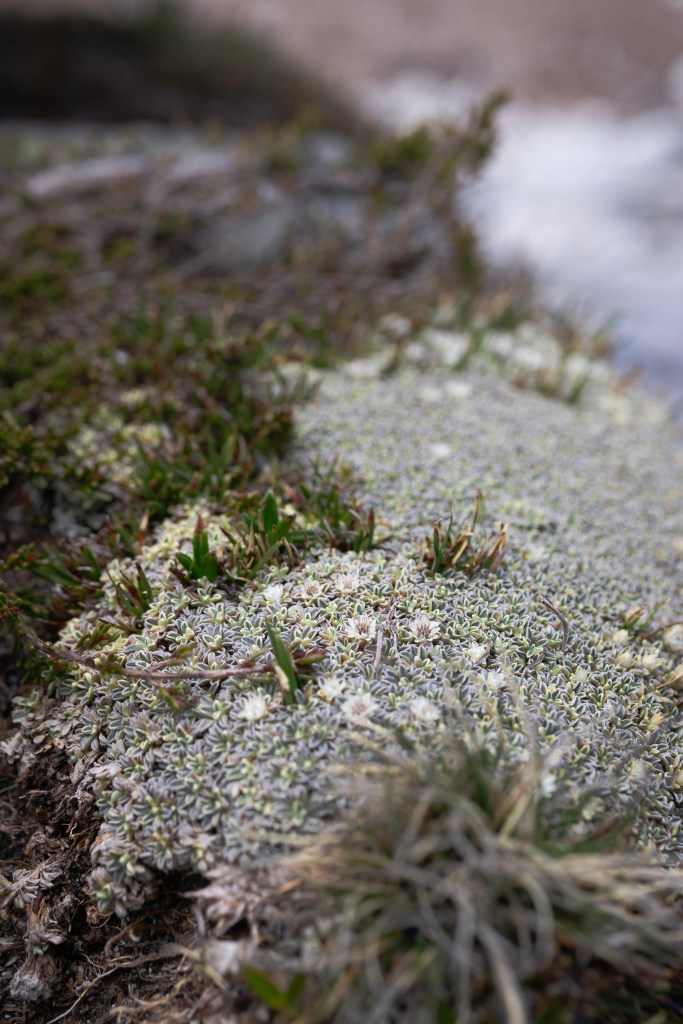
Ewartia meredithae (Rusty Cushion plant)

Now and then, you meet a plant that genuinely surprises you with its resiliency! Ewartia, or cushion plants, endemic to Tasmania, are compact, low-growing plants that form tightly packed stems. They grow hemispherical, which is characteristic of cushion plant species. It can spread a meter in diameter, creating adventitious roots along its branches! Tasmanian cushion plants evolutionarily converged due to wind activity at high altitudes. High winds blow anything away that grows too tall.
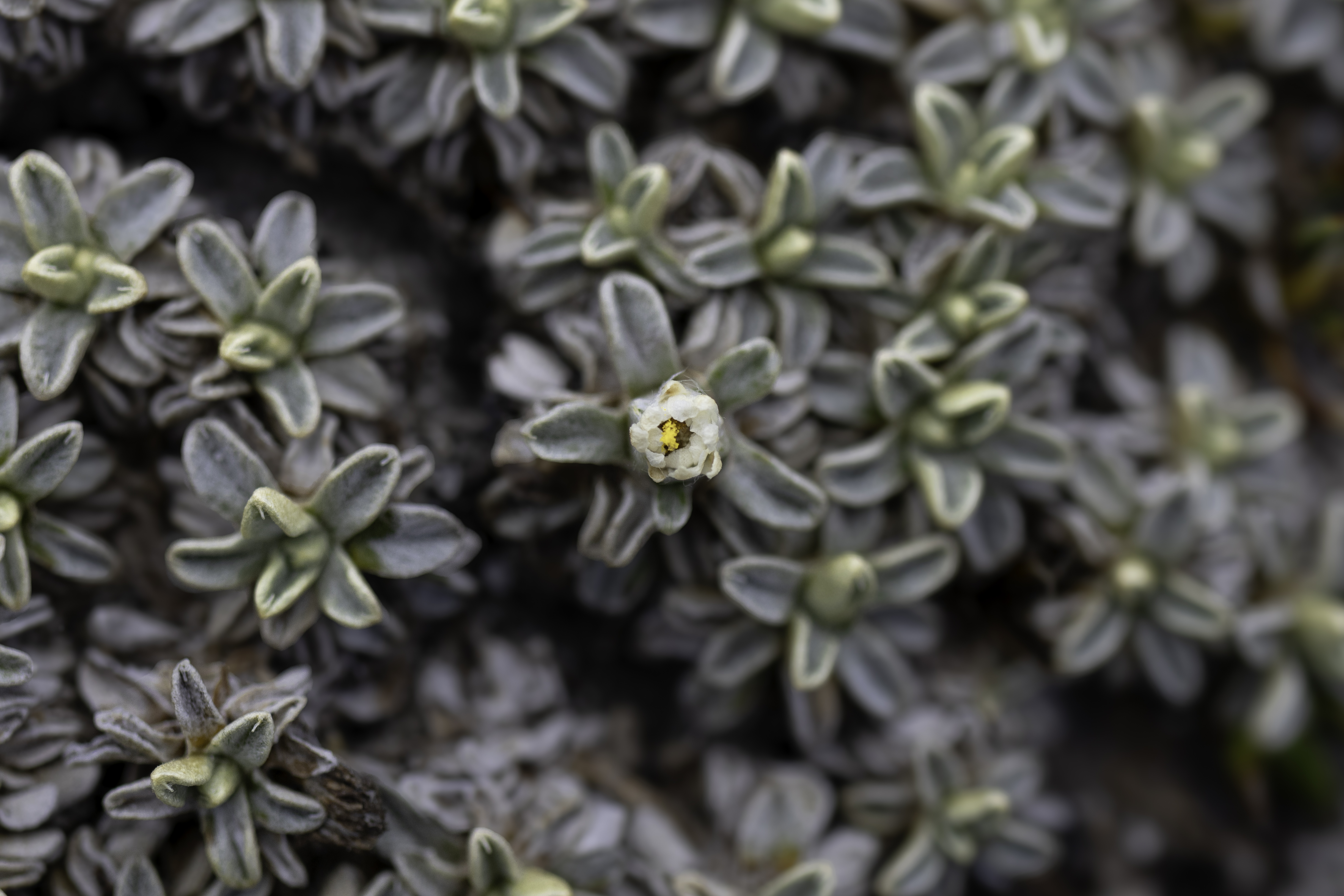
Cushion plants do not form a taxonomic group but describe an excellent example of convergent evolution. Plants growing in harsh environments have evolved similar adaptations of forming compact masses of closely spaced stems. They grow in environments with limited soil formations and low water retention. By developing close to the ground, they minimize wind-based water loss. Because they grow in harsh environments, they have little competition for sunlight and can afford to lose height.
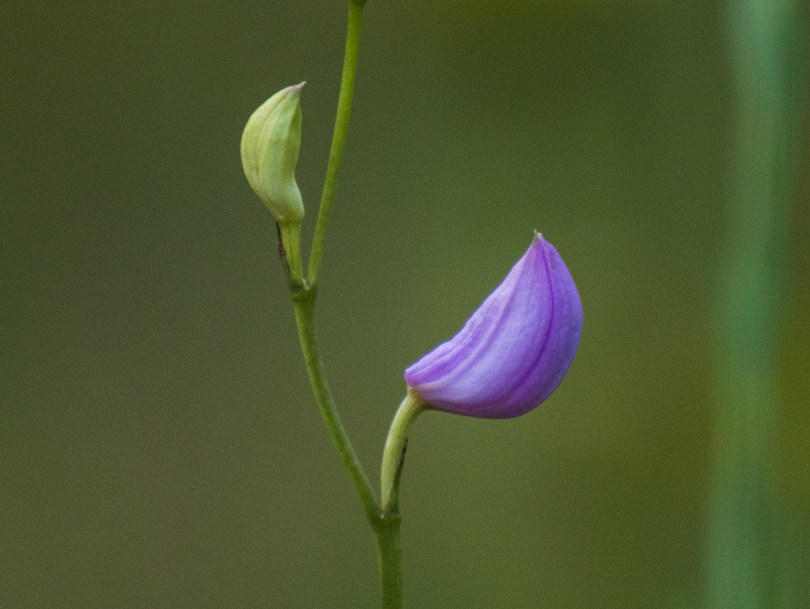
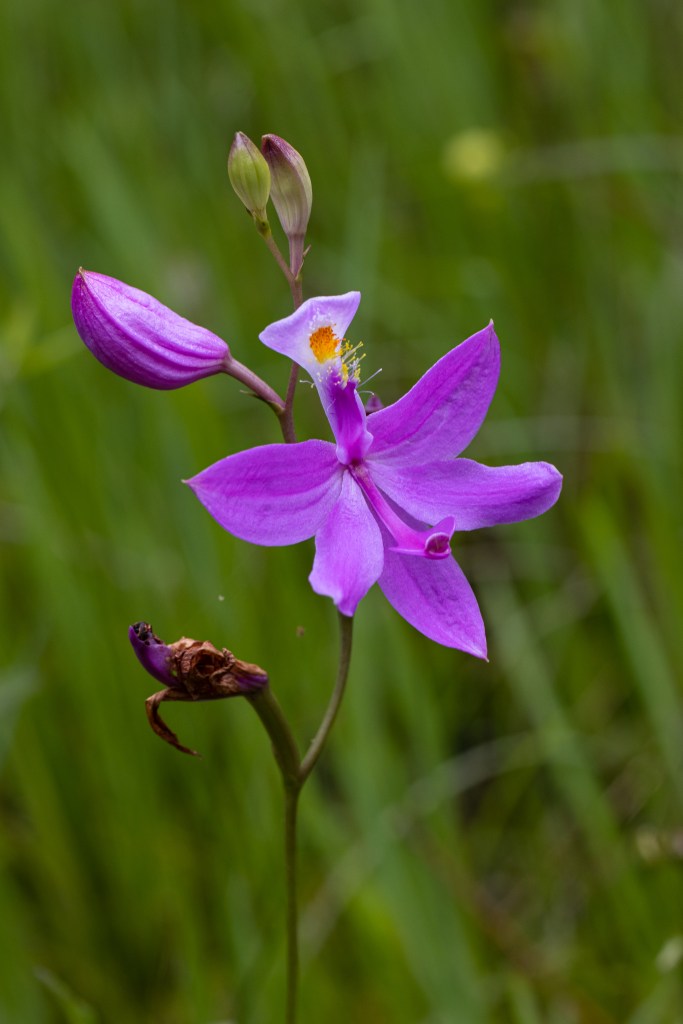
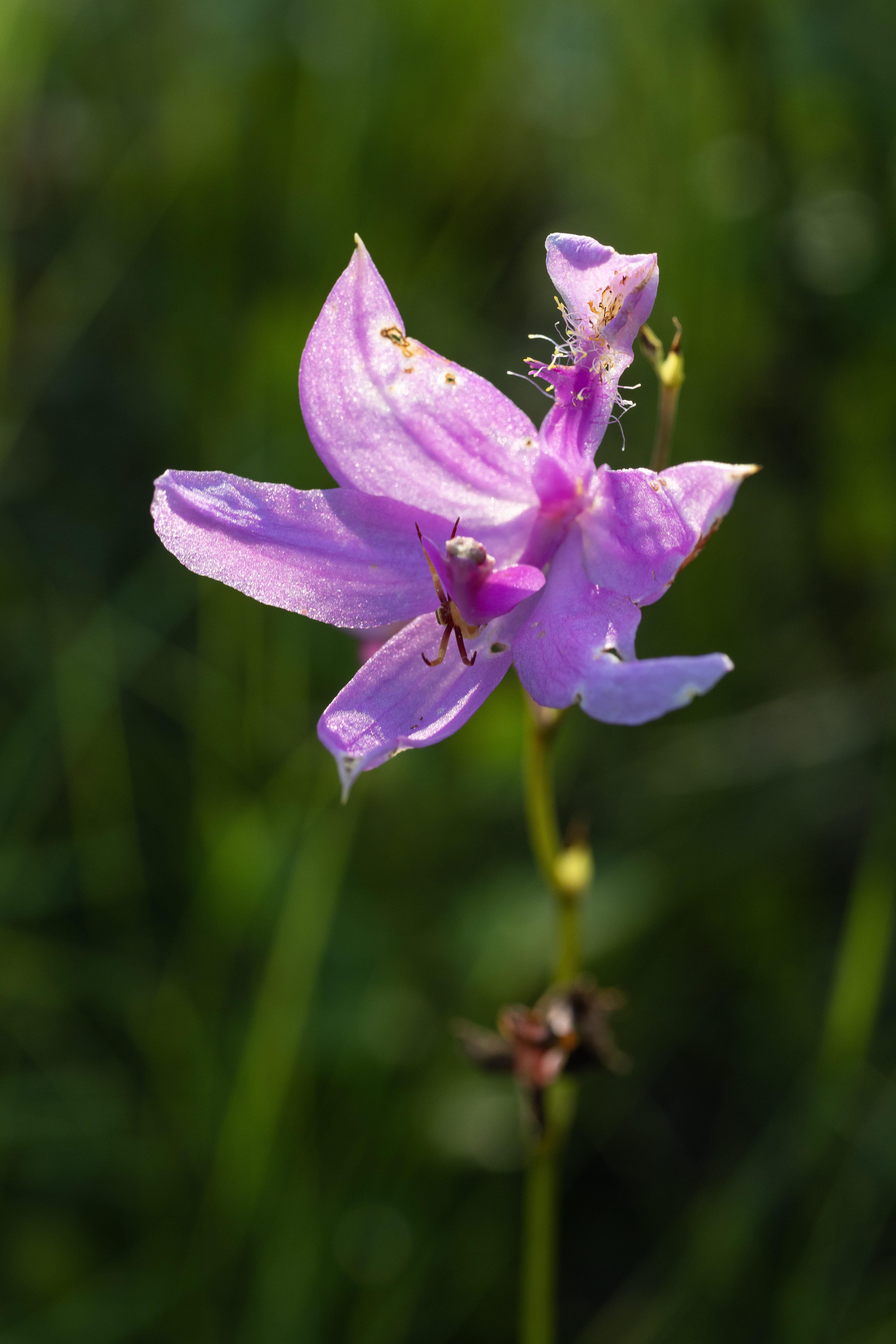
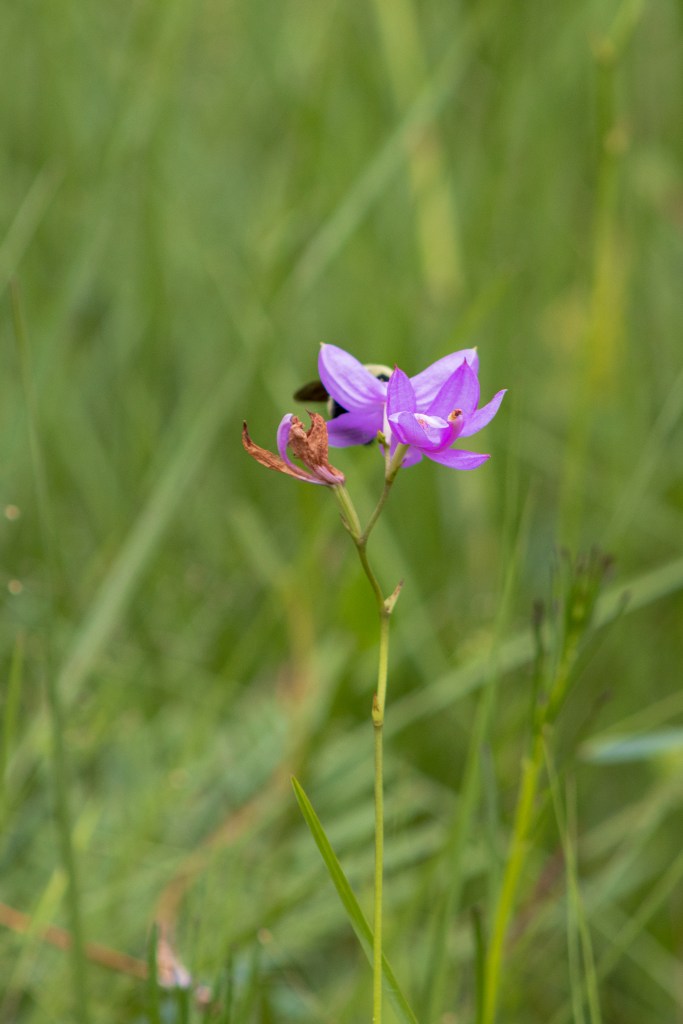
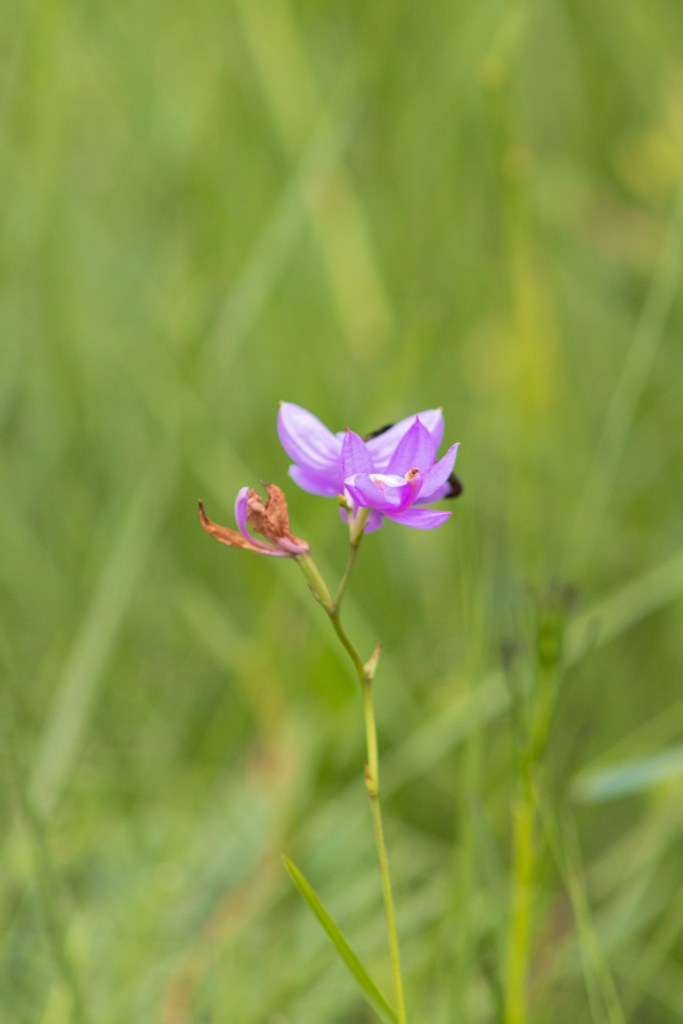
Calopogon (Grasspink orchid)

tuberous grass pink

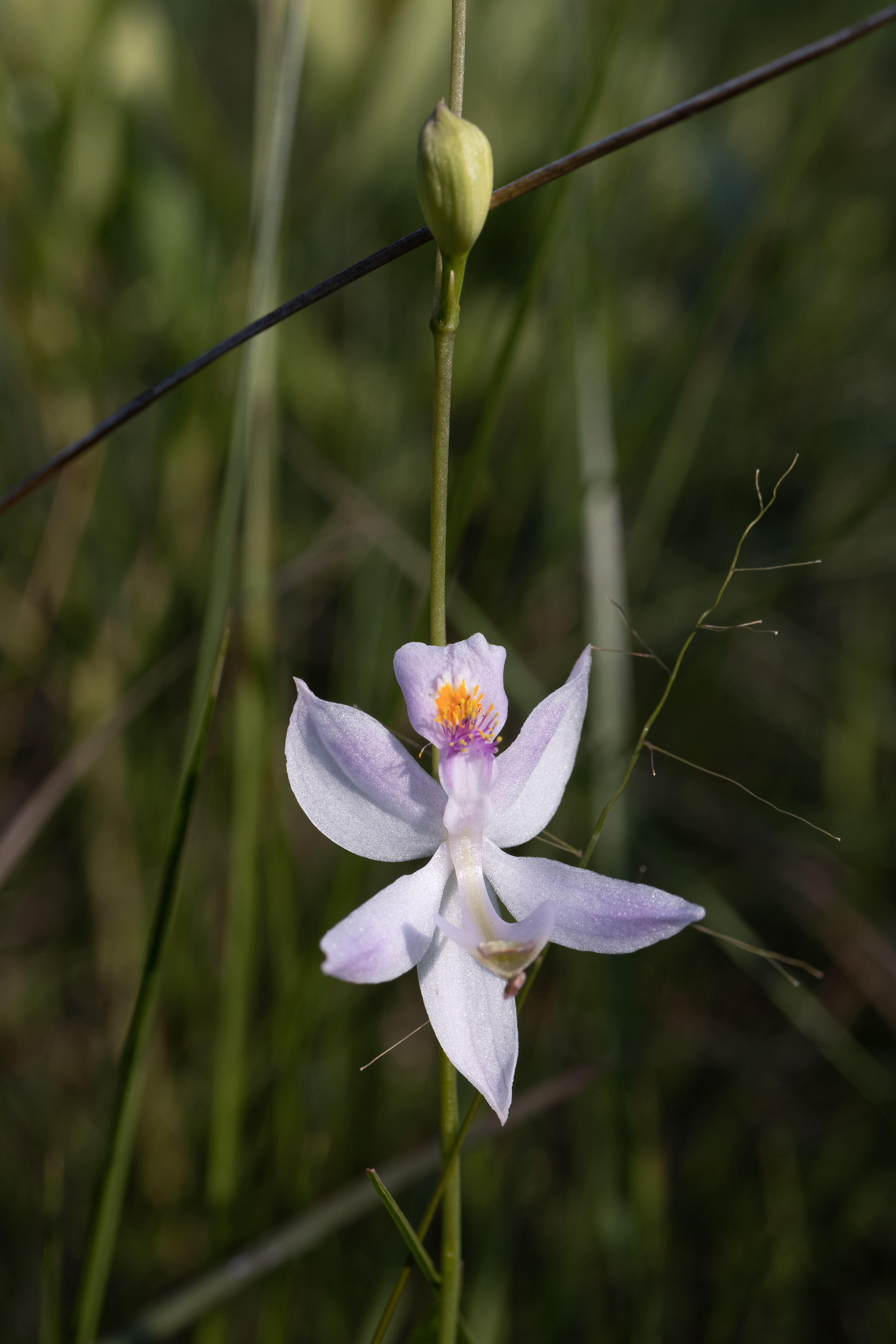
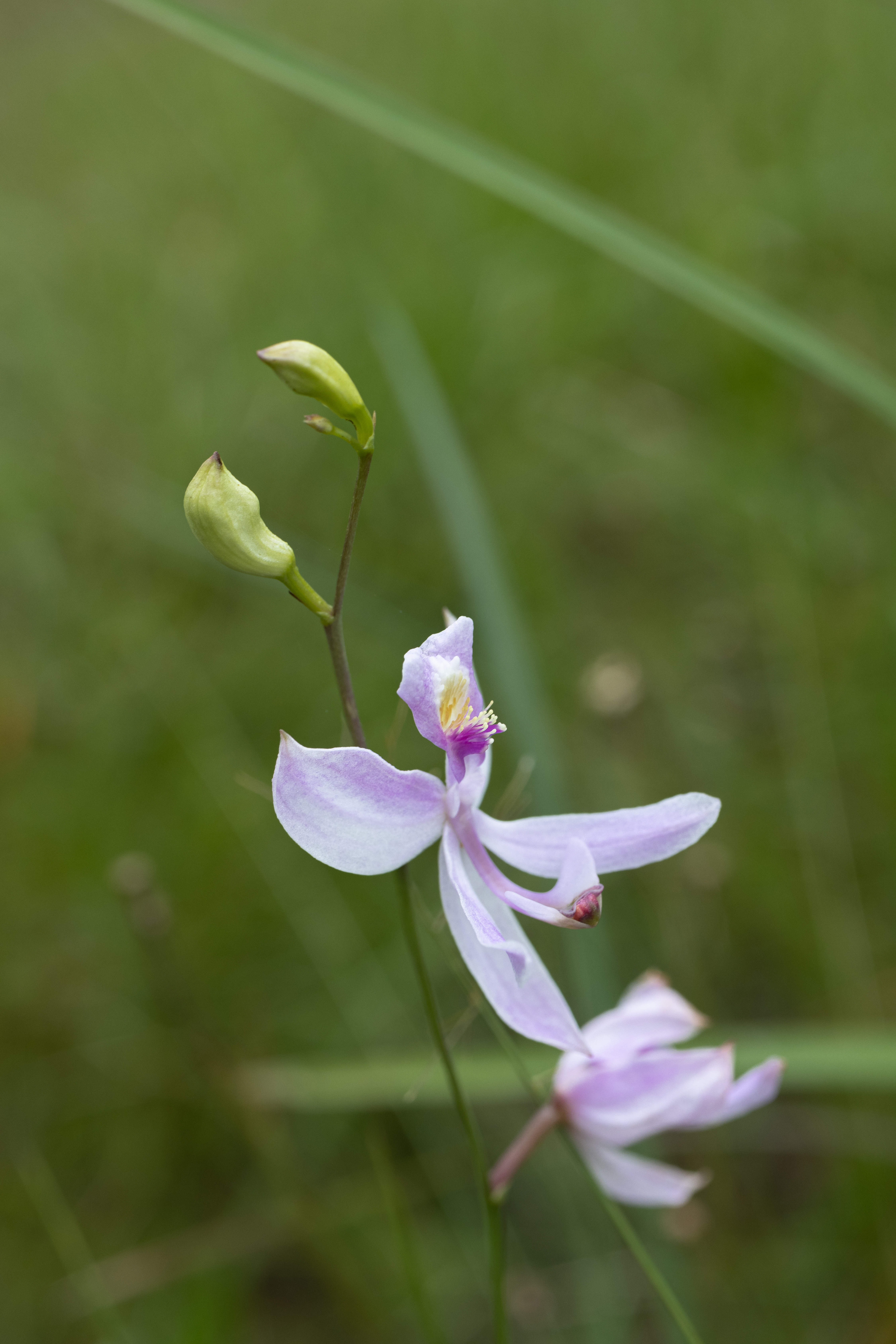
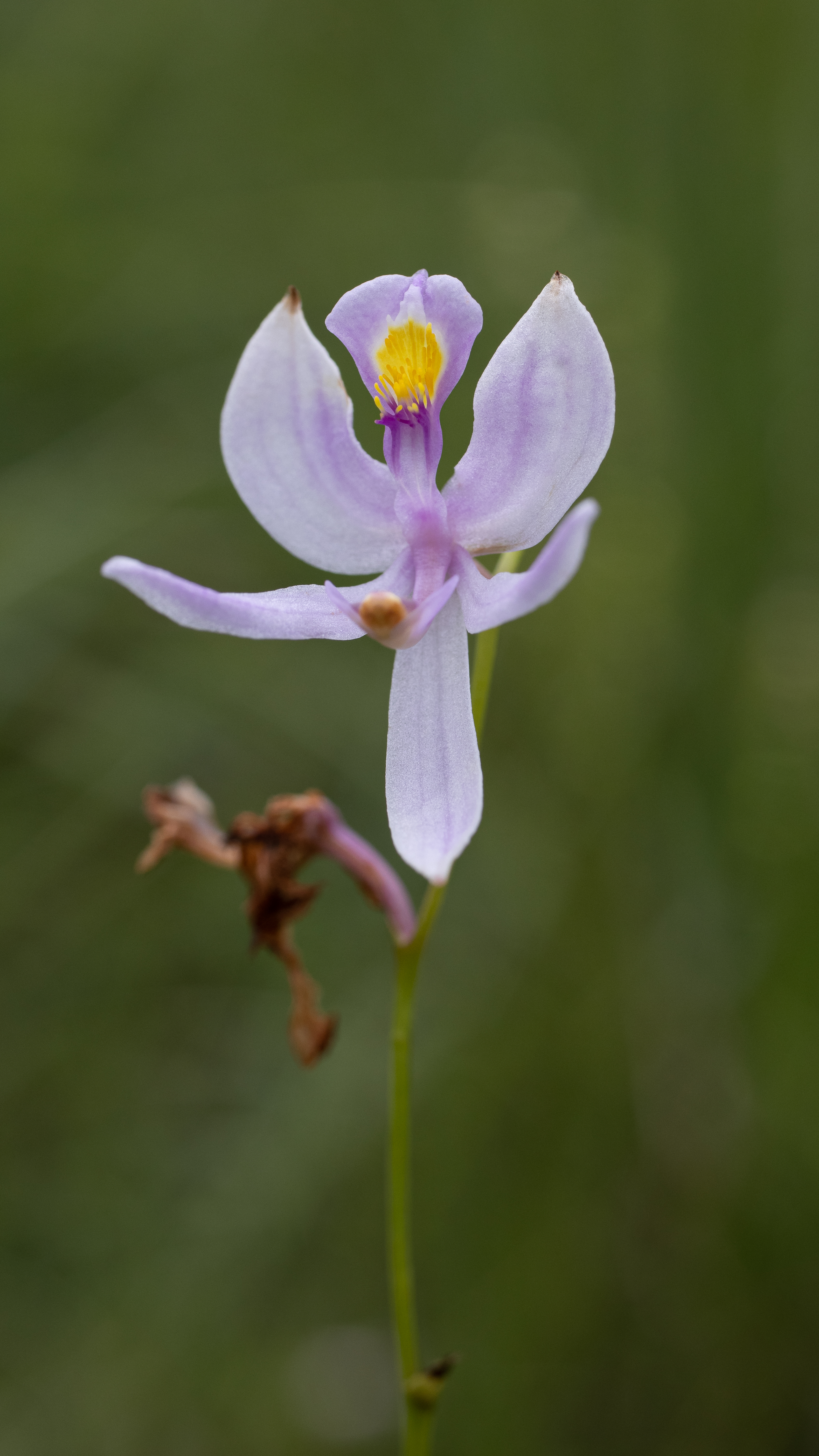
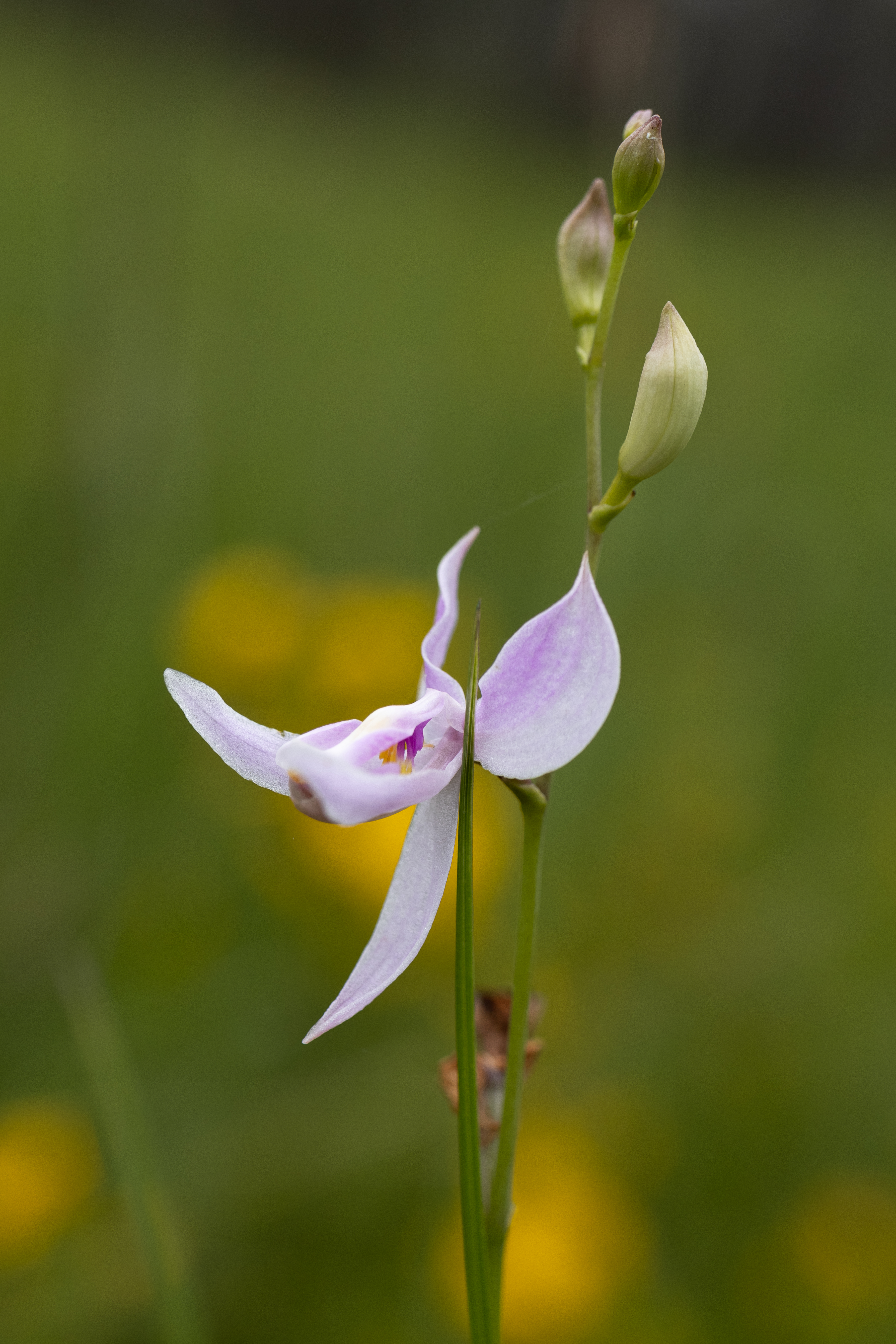
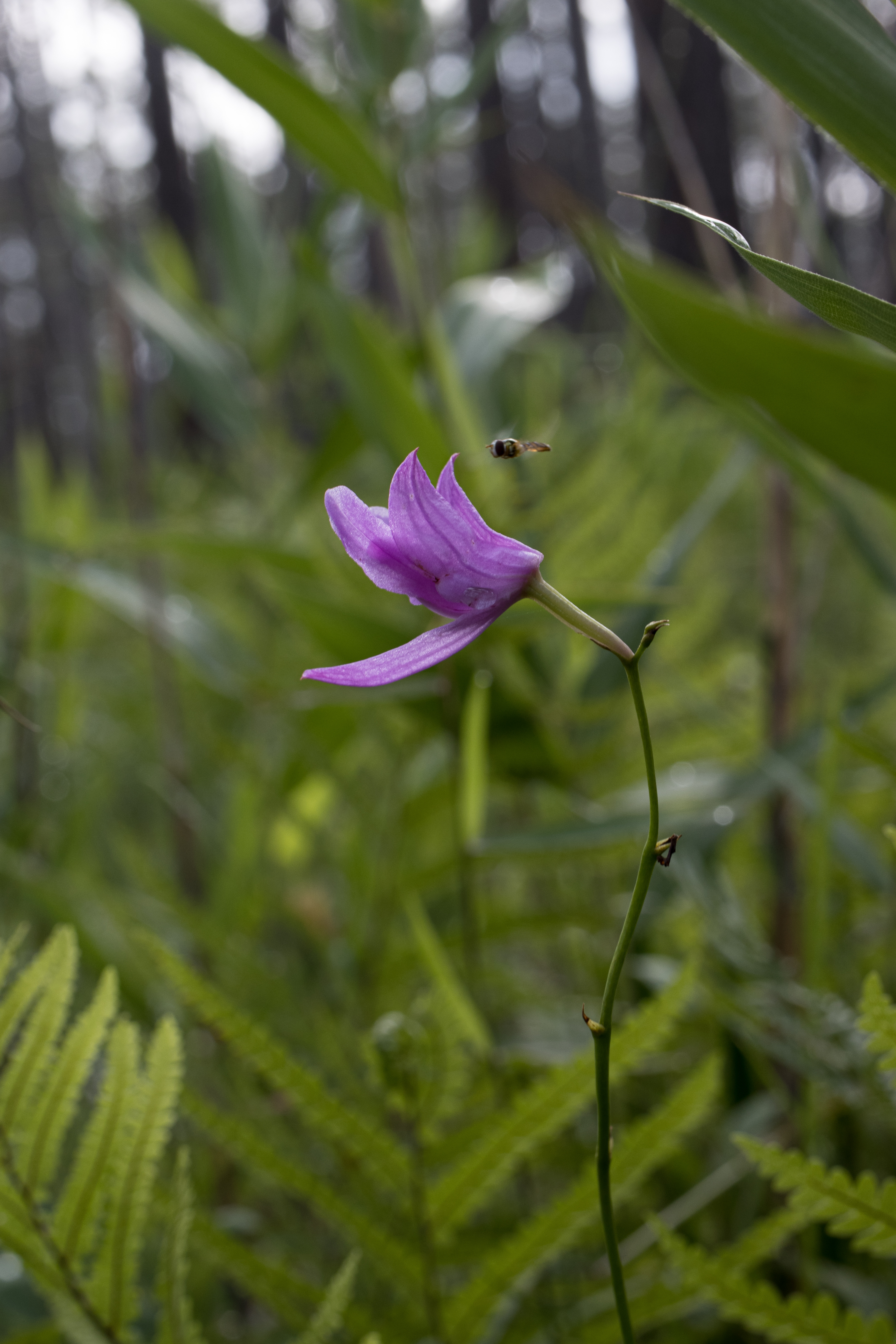
Calopogon, or the grasspink orchid, is a genus endemic to North America. The orchid is frequently found in wet, sunny bogs and marshy areas. The name is Greek and means “beautiful beard,” referring to the hairs found on its lips. Unlike most other orchids, the flowers of the Calopogon are non-resupinate

Found in my trip were the two grasspink species growing in North Carolina, the tuberous grasspink (Calopogon tuberosus), and the pale grasspink (Calopogon pallidus). The flowers within the species show considerable variation in color that made it hard for me to differentiate between the species, but iNaturalist was of much help. Shown here are more photos and their possible ids. Please correct me if they are wrong.

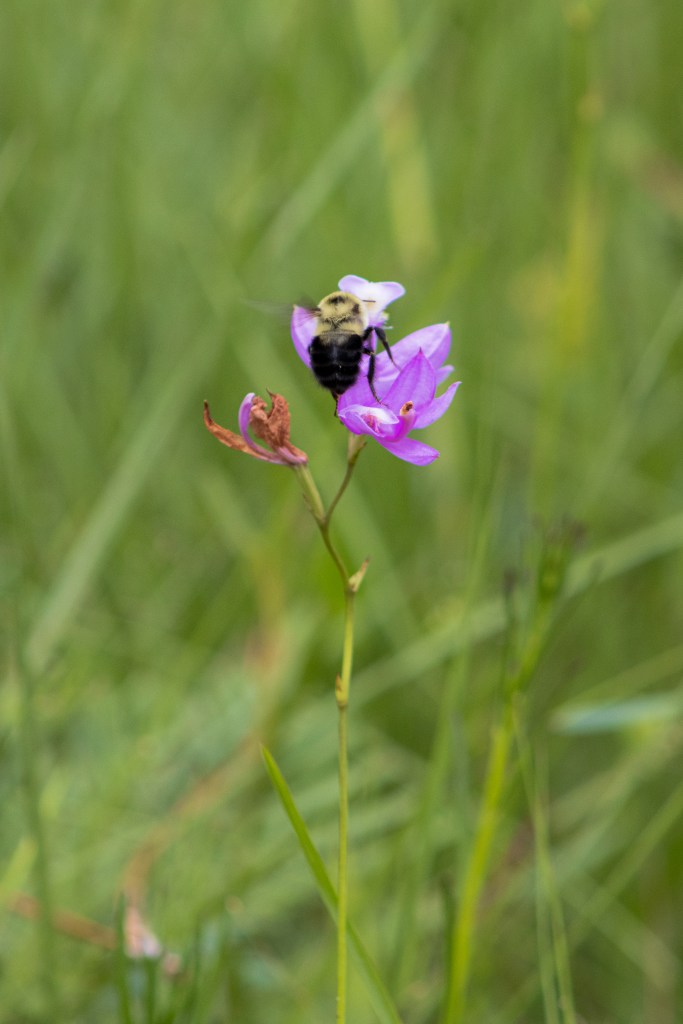
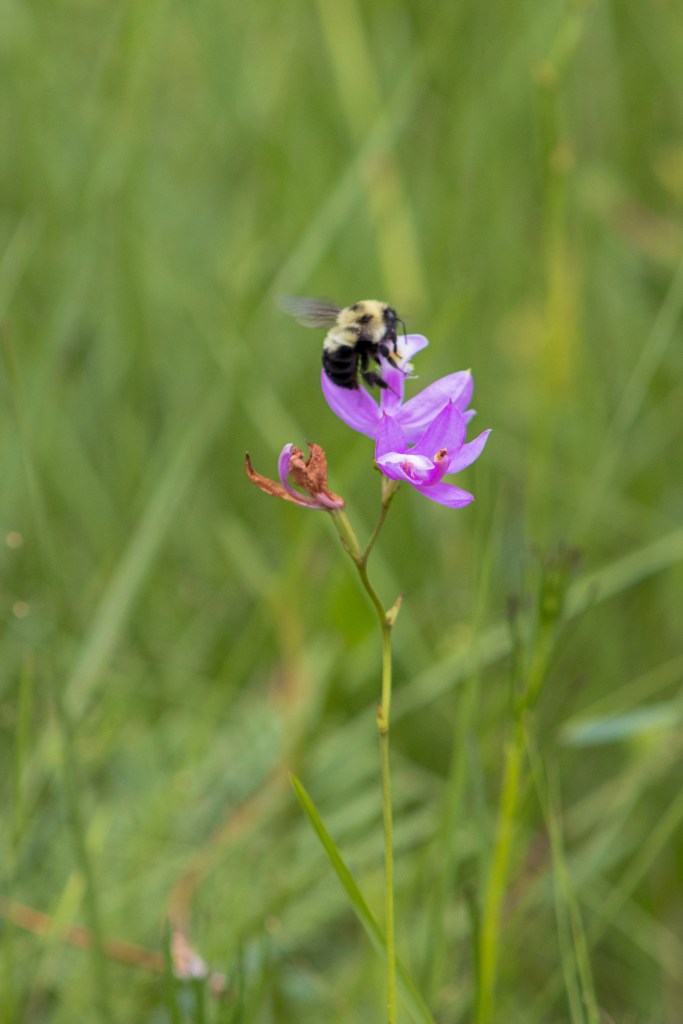
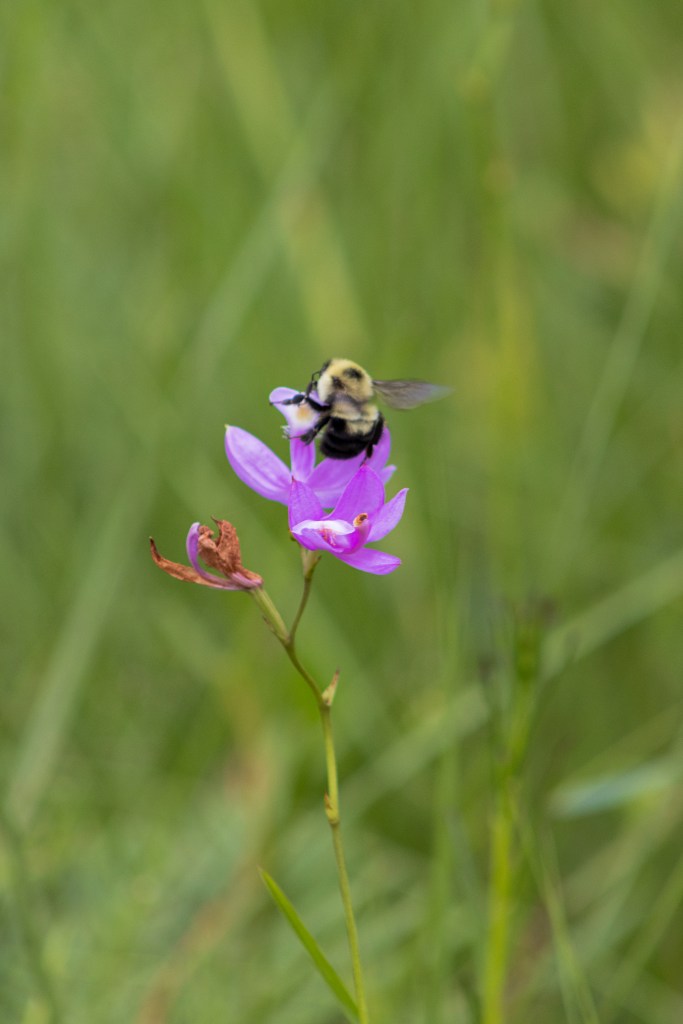
The flowers do not produce nectar or offer a reward to pollinators. Instead, the hairs on its lips trick bees into thinking there is pollen for the taking. From the bee’s weight, it falls onto the column letting the pollinia stick onto the bee. I was lucky enough to capture this poor bees misguided efforts to feed itself.