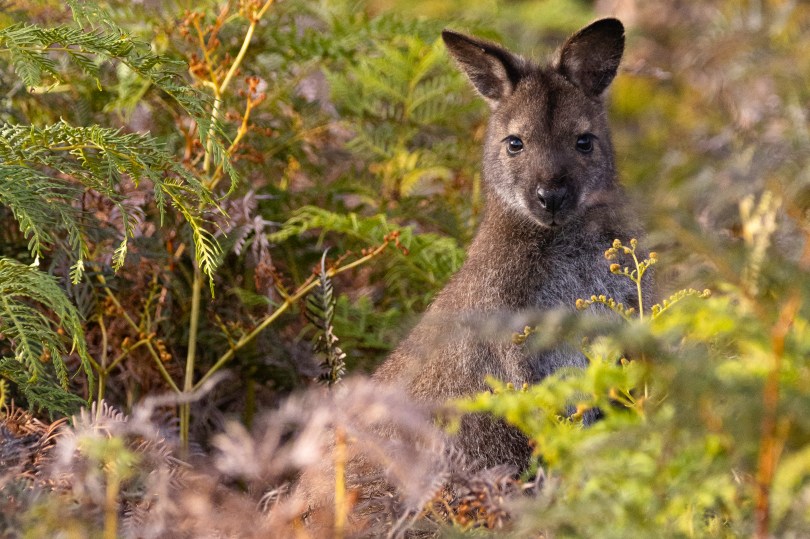

The Red-necked Wallaby, scientifically known as Macropus rufogriseus, is a charming marsupial native to Australia and Tasmania. Characterized by its distinctive red-brown fur on the nape of its neck and shoulders, this medium-sized wallaby exhibits a unique and captivating appearance. With a compact build and a strong tail used for balance, red-necked wallabies are adapted to a diverse range of habitats, including forests, woodlands, and grassy areas.
They are primarily herbivores, feeding on a diet of grasses and vegetation. These agile and social creatures are known for their bounding leaps, which allow them to cover considerable distances with remarkable speed and grace. Red-necked wallabies are integral to Australia’s ecosystems and are a delightful symbol of its rich and diverse wildlife.
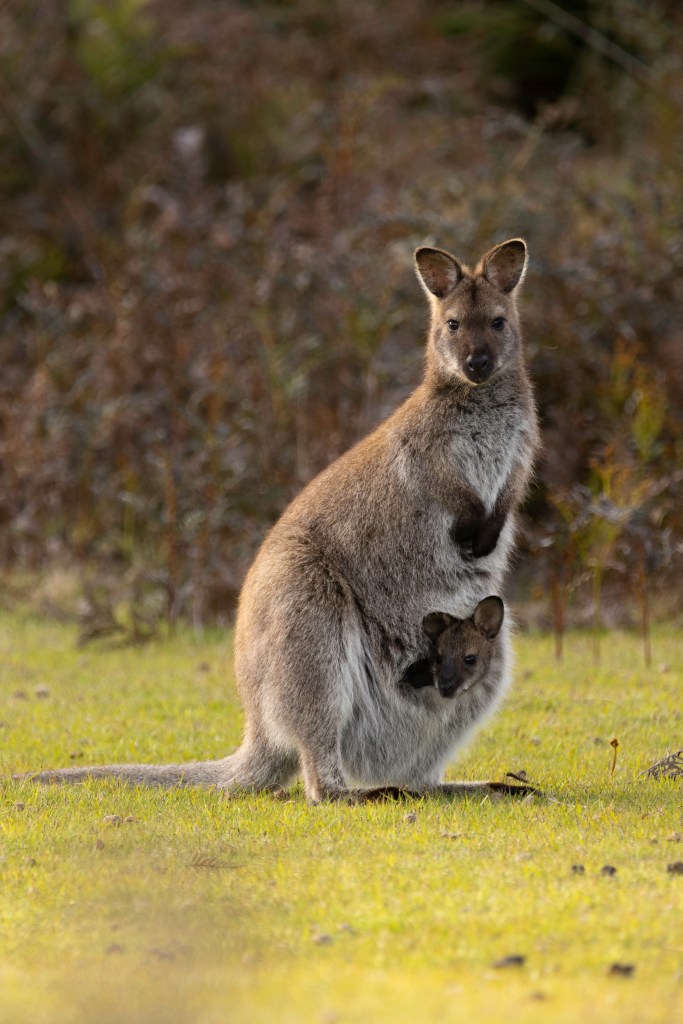
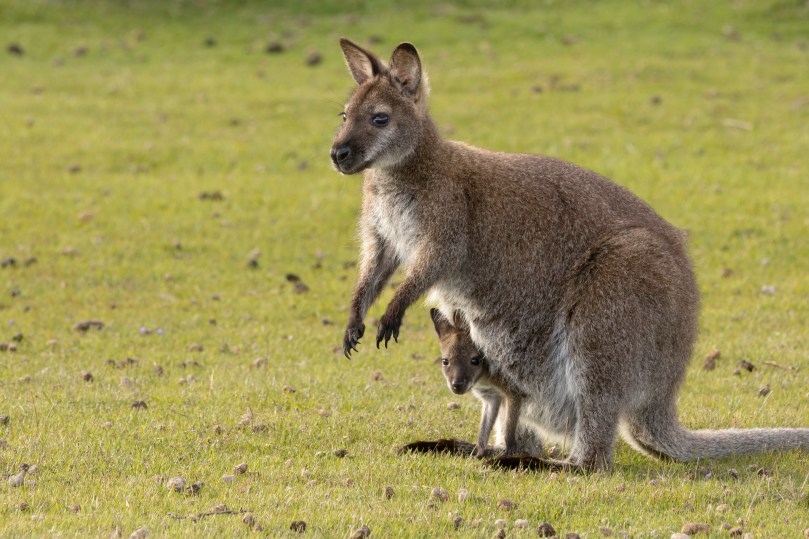
Female wallabies, known as joeys, carry and nurture their young in a remarkable pouch, a defining feature of marsupials. After a relatively short gestation period, Red-necked Wallaby females give birth to tiny, underdeveloped joeys. These vulnerable infants, no larger than a jellybean, then make their way into the safety of their mother’s pouch. Once they are old enough, they start grazing right from their mother’s pouch!
 Exploring Free Green Cascadia