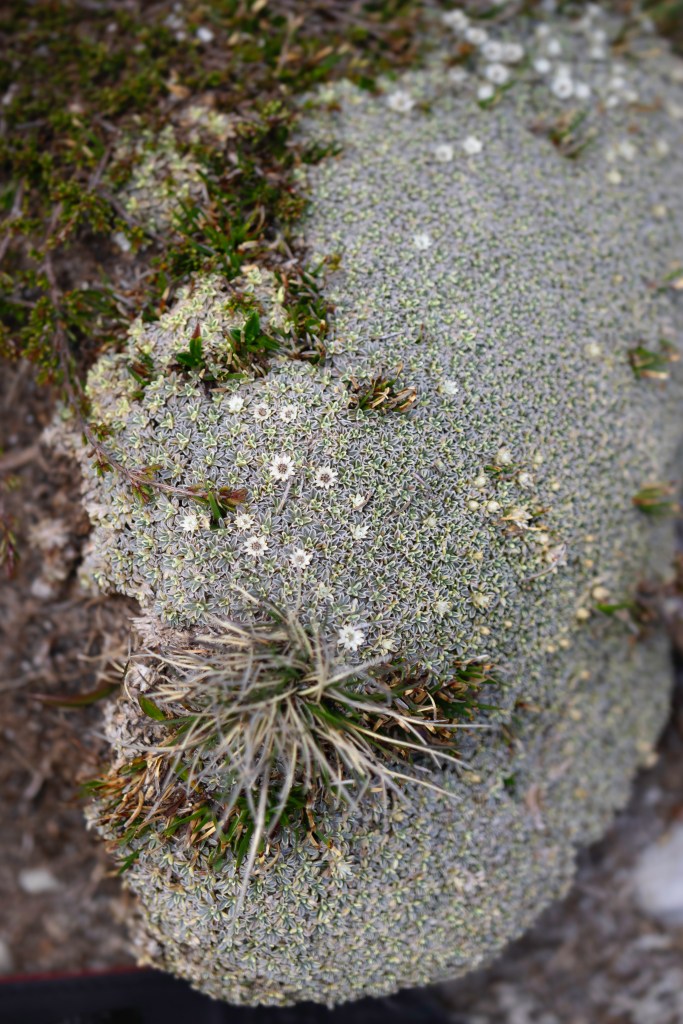
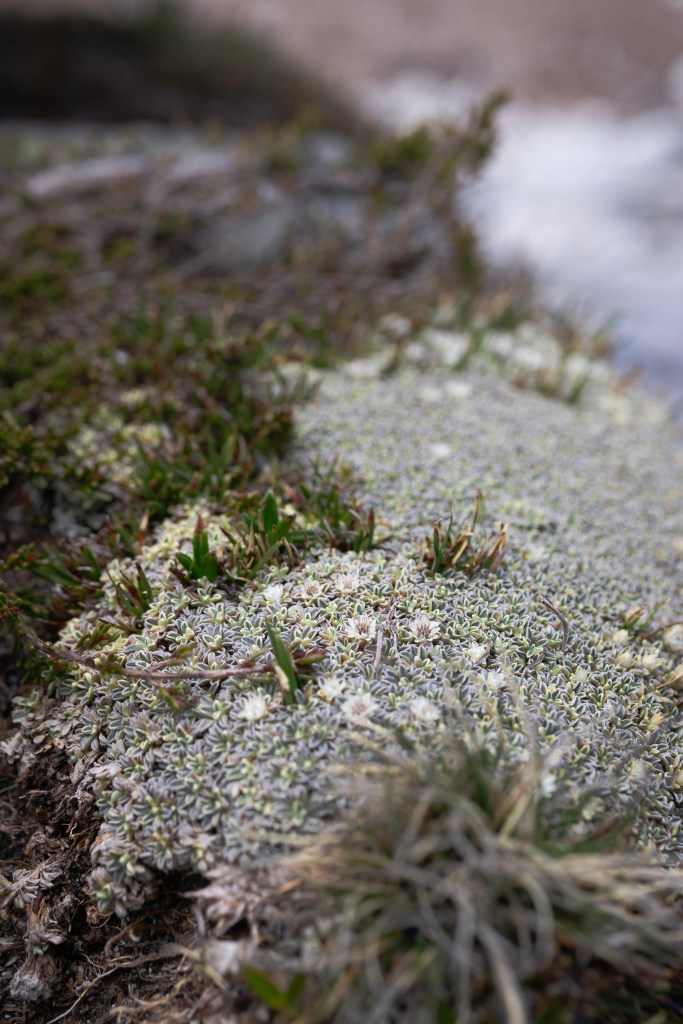
Ewartia meredithae (Rusty Cushion plant)

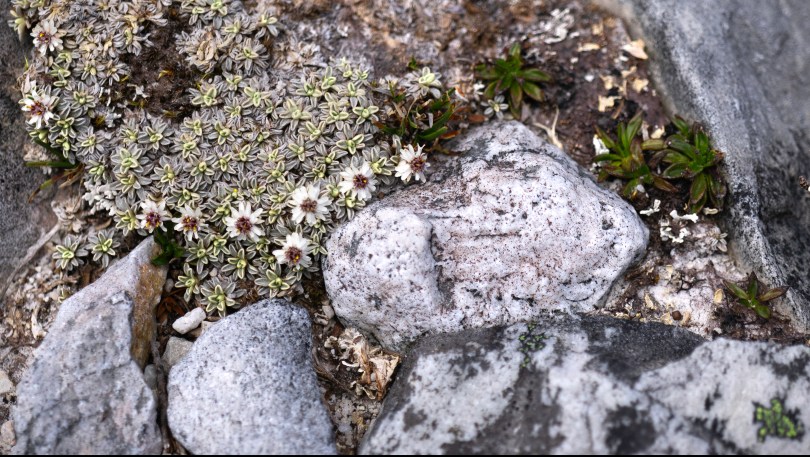
Now and then, you meet a plant that genuinely surprises you with its resiliency! Ewartia, or cushion plants, endemic to Tasmania, are compact, low-growing plants that form tightly packed stems. They grow hemispherical, which is characteristic of cushion plant species. It can spread a meter in diameter, creating adventitious roots along its branches! Tasmanian cushion plants evolutionarily converged due to wind activity at high altitudes. High winds blow anything away that grows too tall.
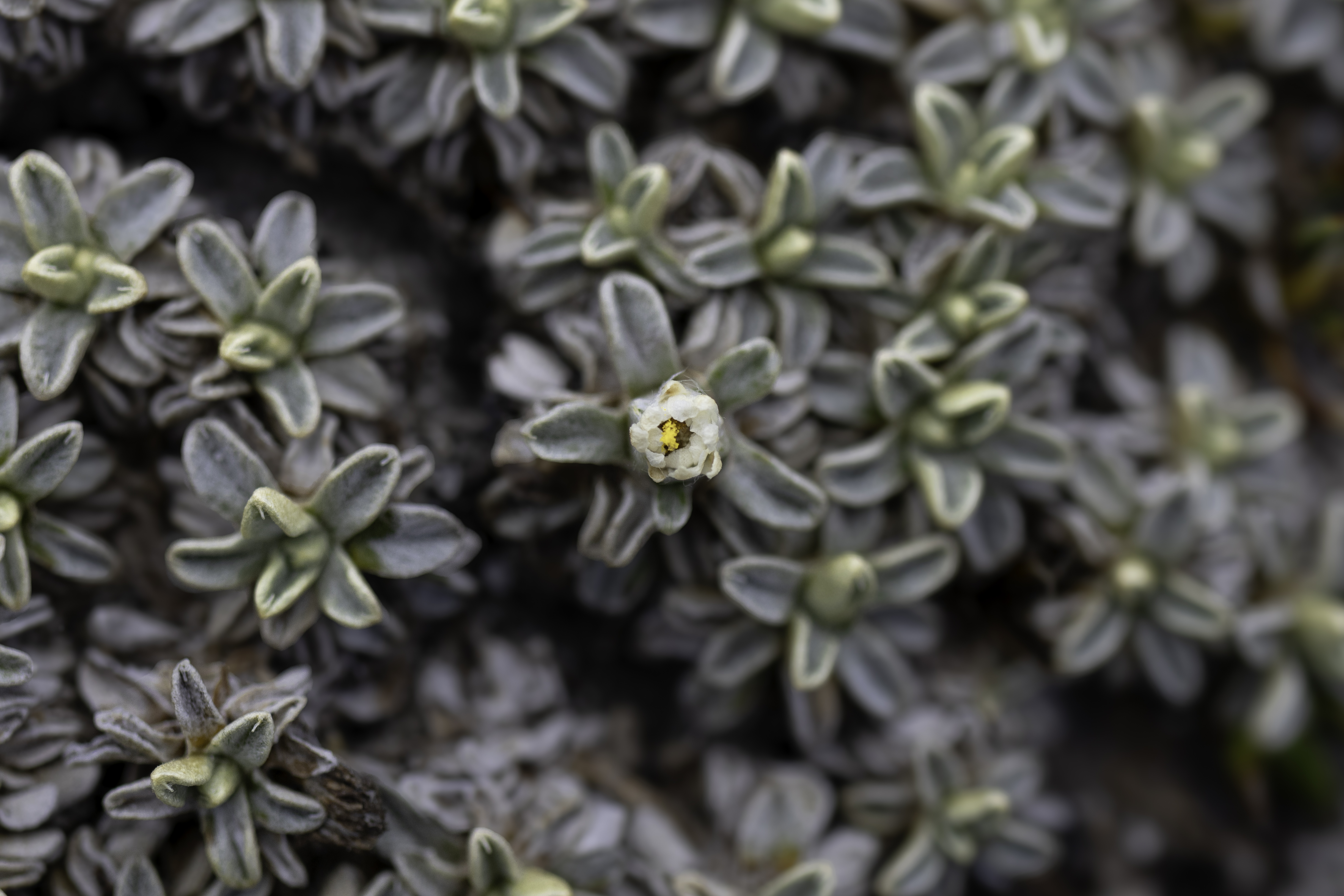
Cushion plants do not form a taxonomic group but describe an excellent example of convergent evolution. Plants growing in harsh environments have evolved similar adaptations of forming compact masses of closely spaced stems. They grow in environments with limited soil formations and low water retention. By developing close to the ground, they minimize wind-based water loss. Because they grow in harsh environments, they have little competition for sunlight and can afford to lose height.
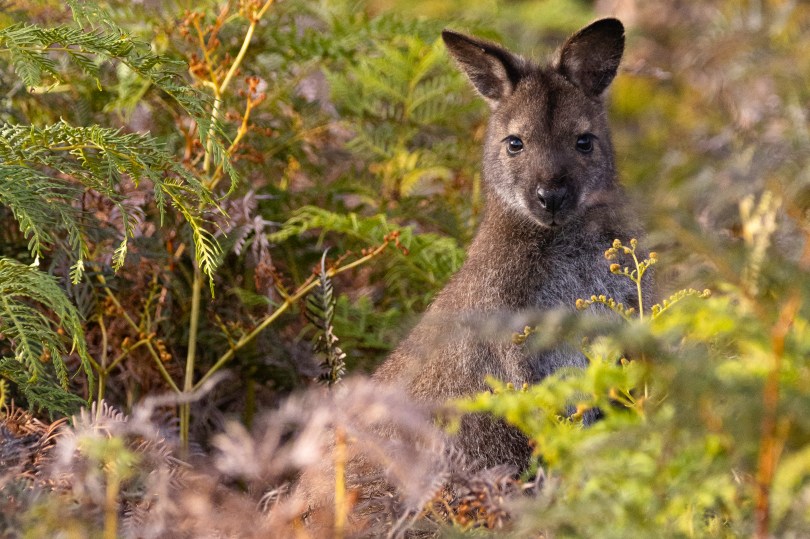
Notamacropus rufogriseus (Red-necked Wallaby)

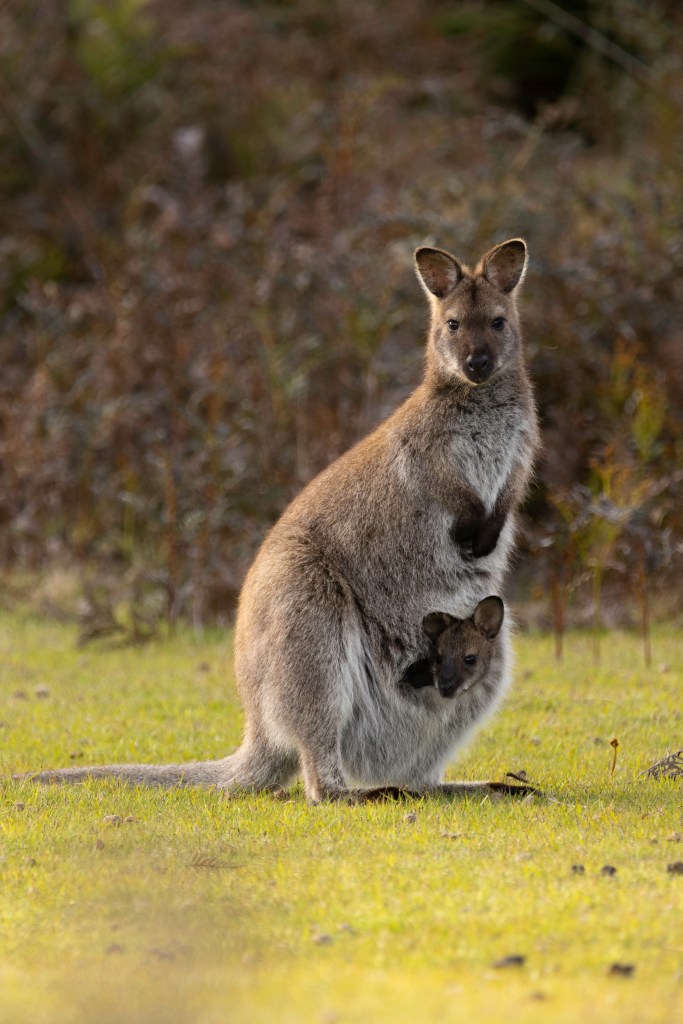
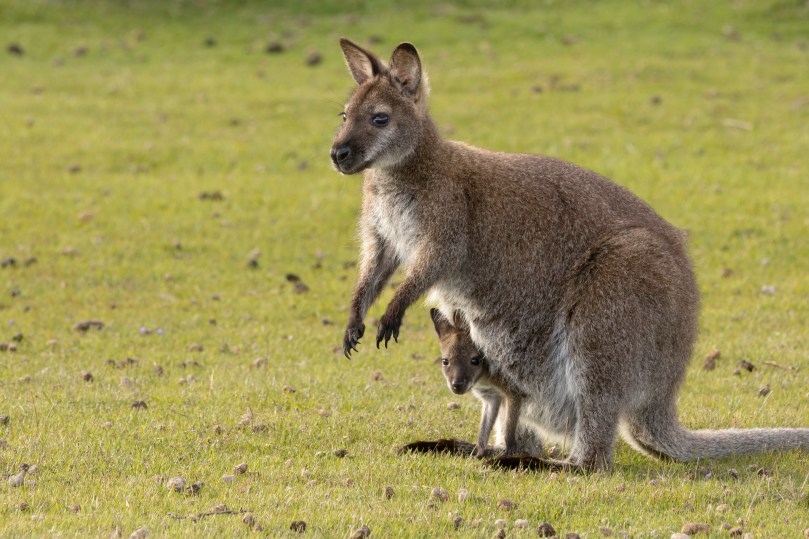
The Red-necked Wallaby, scientifically known as Macropus rufogriseus, is a charming marsupial native to Australia and Tasmania. Characterized by its distinctive red-brown fur on the nape of its neck and shoulders, this medium-sized wallaby exhibits a unique and captivating appearance. With a compact build and a strong tail used for balance, red-necked wallabies are adapted to a diverse range of habitats, including forests, woodlands, and grassy areas.

They are primarily herbivores, feeding on a diet of grasses and vegetation. These agile and social creatures are known for their bounding leaps, which allow them to cover considerable distances with remarkable speed and grace. Red-necked wallabies are integral to Australia’s ecosystems and are a delightful symbol of its rich and diverse wildlife.

Female wallabies, known as joeys, carry and nurture their young in a remarkable pouch, a defining feature of marsupials. After a relatively short gestation period, Red-necked Wallaby females give birth to tiny, underdeveloped joeys. These vulnerable infants, no larger than a jellybean, then make their way into the safety of their mother’s pouch. Once they are old enough, they start grazing right from their mother’s pouch!