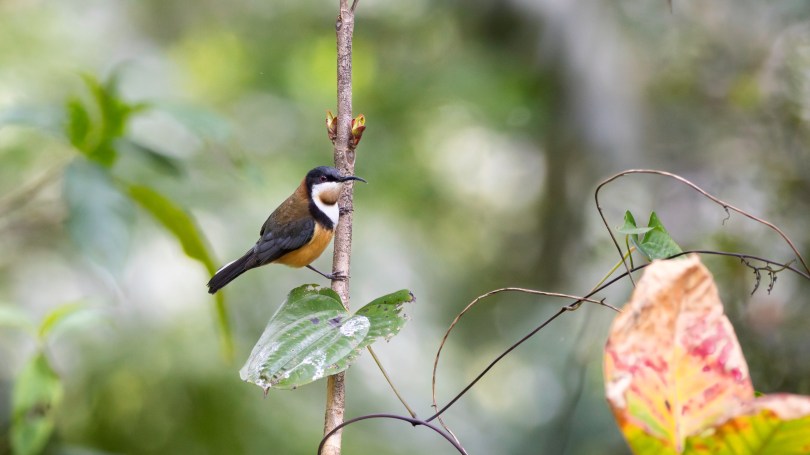
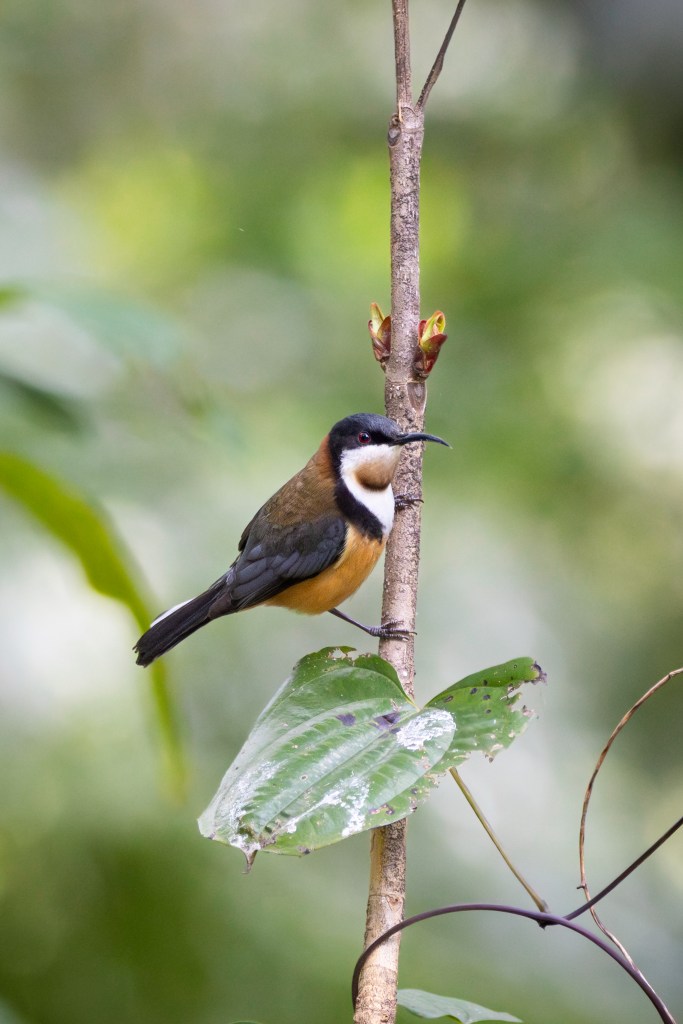
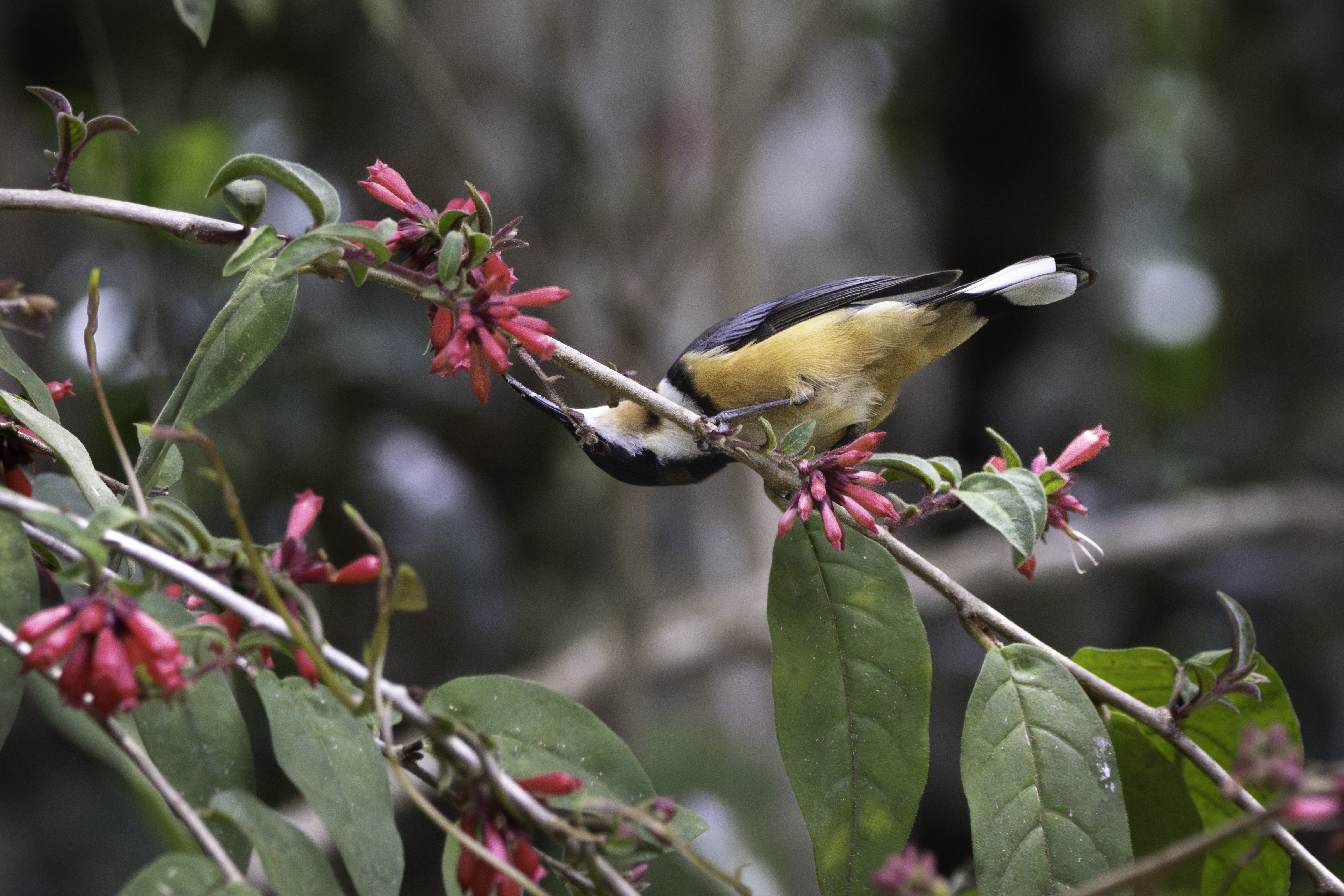
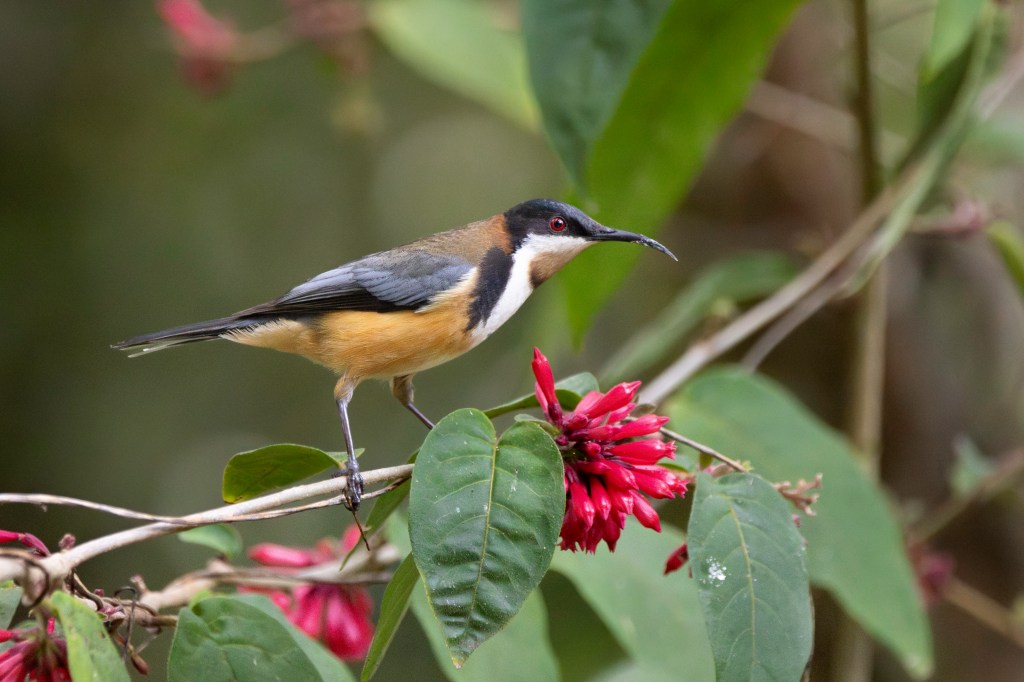
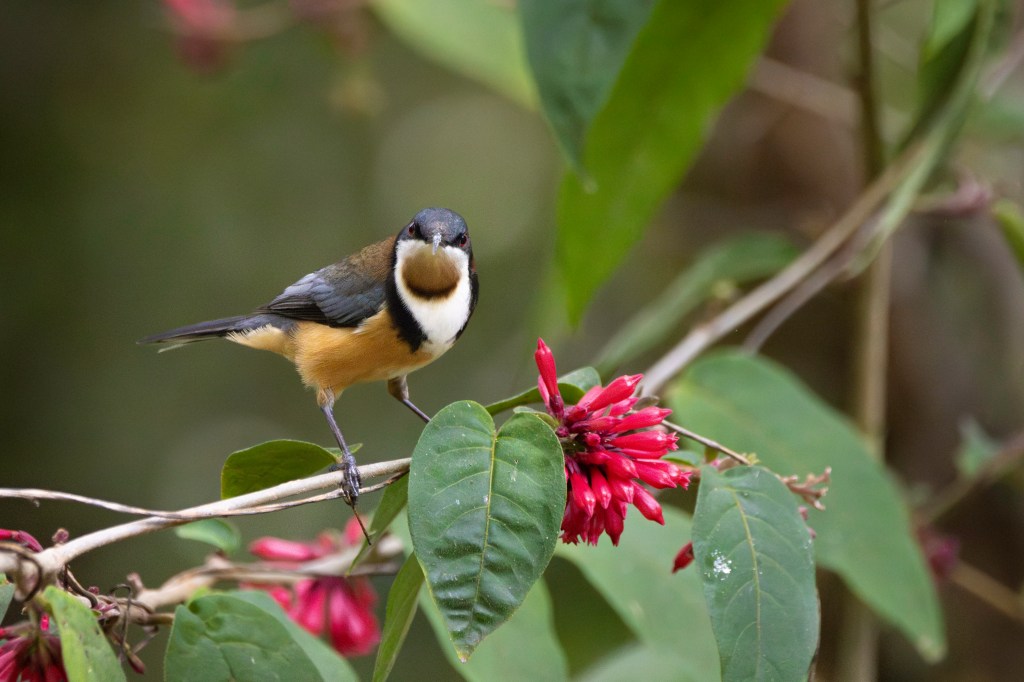
Eastern spine bill is a beautiful honeyeater endemic to south-eastern Australia. The bird’s distinguishing feature is the long, needle-like bill, which adeptly extracts nectar from various flowering plants. This evolutionary feature independently evolves in many nectar-drinking species like I’iwi.
Vibrant colors adorn the male plumage, including a dark crown, a cinnamon-colored throat, and a contrasting white chest.
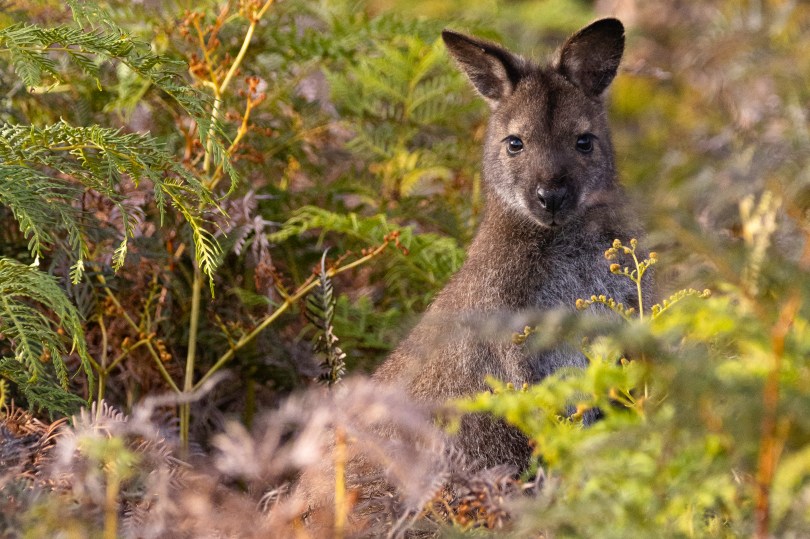
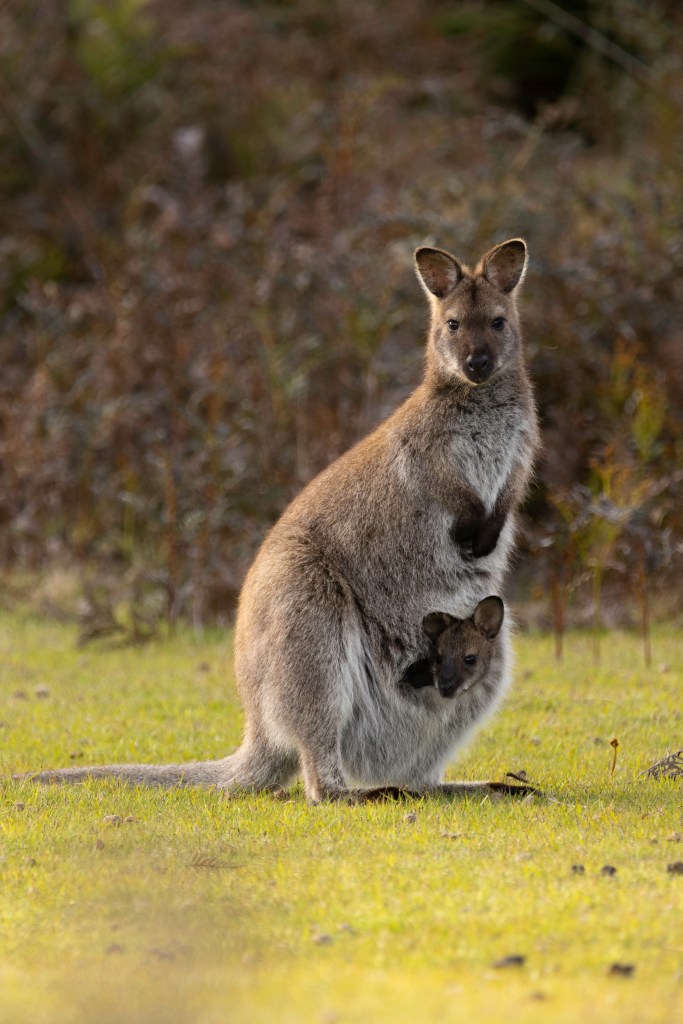
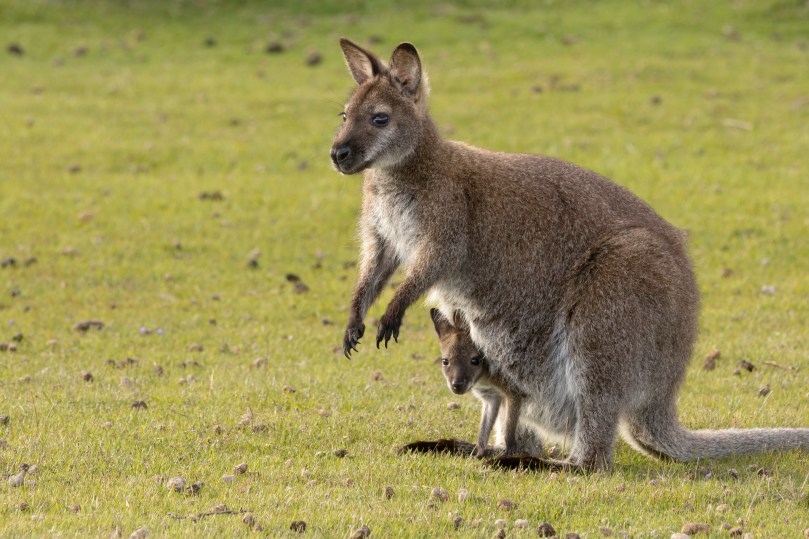
The Red-necked Wallaby, scientifically known as Macropus rufogriseus, is a charming marsupial native to Australia and Tasmania. Characterized by its distinctive red-brown fur on the nape of its neck and shoulders, this medium-sized wallaby exhibits a unique and captivating appearance. With a compact build and a strong tail used for balance, red-necked wallabies are adapted to a diverse range of habitats, including forests, woodlands, and grassy areas.
They are primarily herbivores, feeding on a diet of grasses and vegetation. These agile and social creatures are known for their bounding leaps, which allow them to cover considerable distances with remarkable speed and grace. Red-necked wallabies are integral to Australia’s ecosystems and are a delightful symbol of its rich and diverse wildlife.
Female wallabies, known as joeys, carry and nurture their young in a remarkable pouch, a defining feature of marsupials. After a relatively short gestation period, Red-necked Wallaby females give birth to tiny, underdeveloped joeys. These vulnerable infants, no larger than a jellybean, then make their way into the safety of their mother’s pouch. Once they are old enough, they start grazing right from their mother’s pouch!
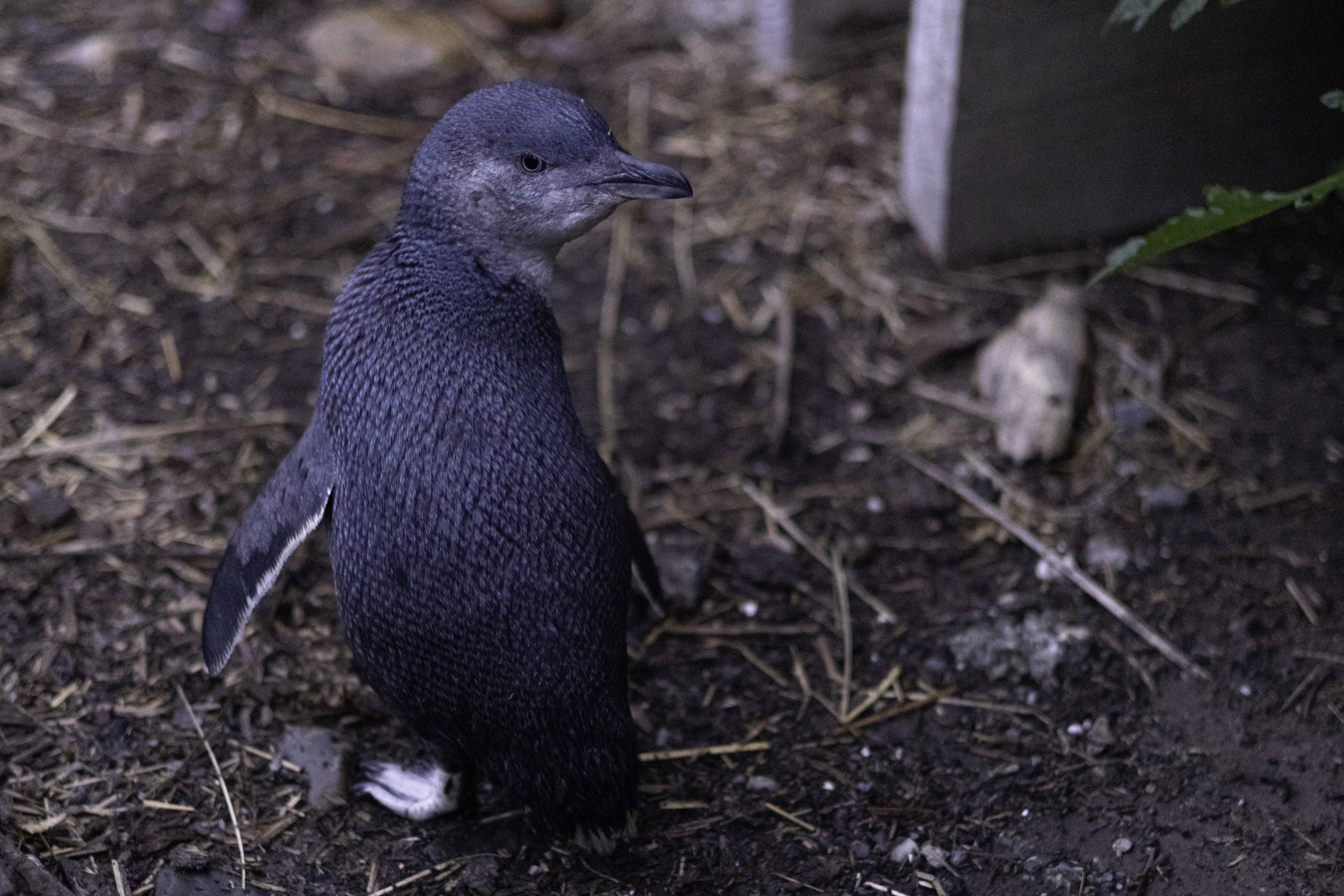
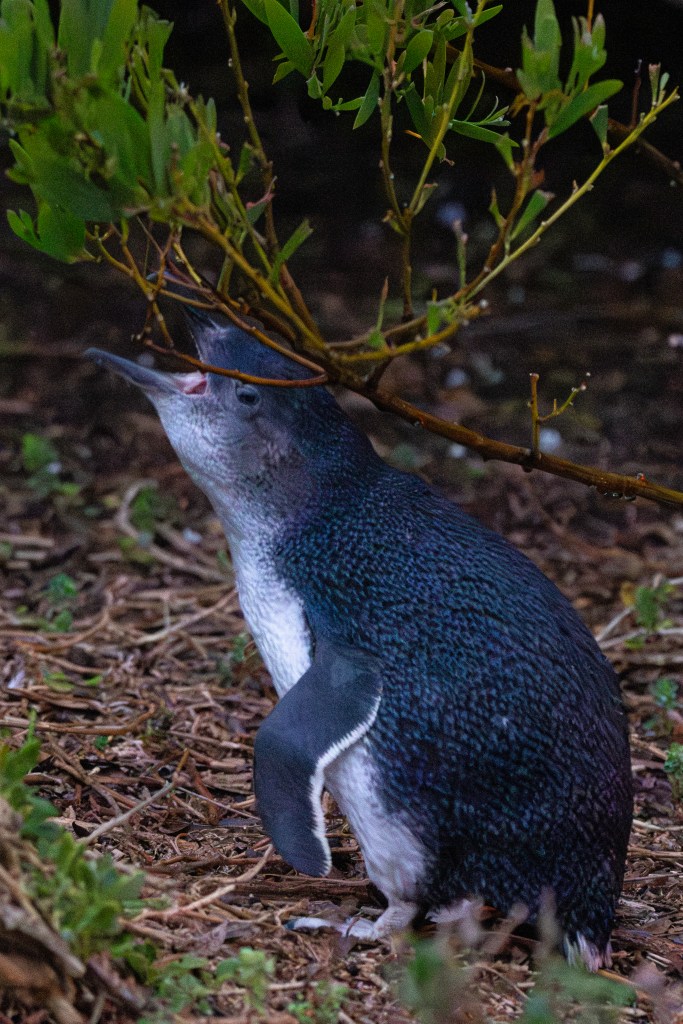
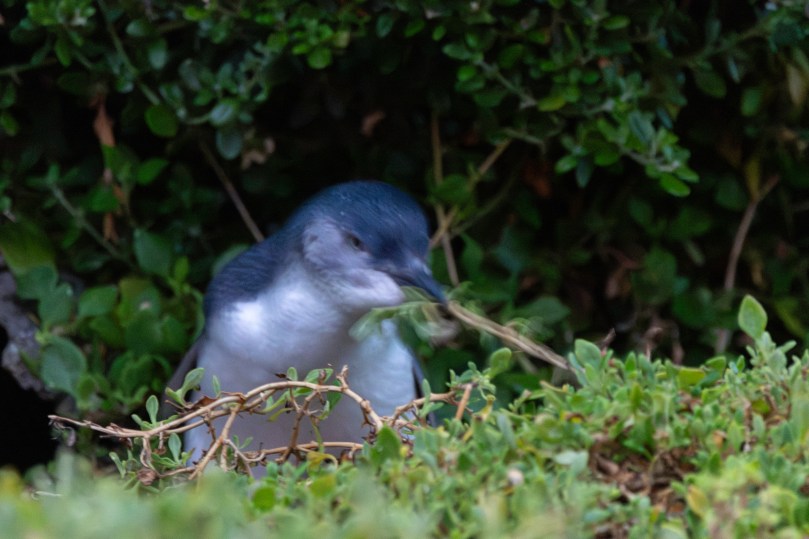
Australian little penguins, or blue penguins, are one of the smallest penguin species in the world, growing to about a foot. They were once considered a subspecies of the little penguin from New Zealand, but later, mtDNA revealed that the Australian little penguins are a species of their own. Other than their behavioral differences, a critical difference between the two little penguin species is the striking blue plumage of the Australian species.
Little penguins spend most of their day in the ocean. During breeding season, the adults leave their chicks in their nest for the day as they head out into the sea to forage, returning at night to feed their young. One behavioral difference between New Zealand and the Australian penguin is that the Australian blue penguins come ashore in small groups, possibly to protect against predatory marsupials that did not exist in New Zealand.
The blue penguin is native to southern Australia, including Tasmania, where these cranky juveniles were photographed waiting impatiently for their parents to return! They are also found in the Otago region of New Zealand.


 Exploring Free Green Cascadia